7 min read · Published: August 26, 2024 · Updated: October 29, 2026 · Prices and details checked: October 2026
Choose the Serra de Tramuntana if you want mountains, villages and walking, the north if you want a quiet bay and easy day trips, the southeast if you want small coves and a slower pace, and Palma if you want culture without needing a car. The month you travel matters almost as much as the region: spring and autumn give you calm, summer gives you heat and crowds.
Key takeaways
- The Serra de Tramuntana, a UNESCO-listed cultural landscape, is the best base for walking, village stays and a quiet mountain setting.
- The north (Pollença and Alcúdia) suits people who want a bay, a promenade and short transfers, while the southeast suits small coves and rural stays.
- Spring and autumn are the calmest seasons; July and August are the hottest and busiest.
- Palma has regular public transport links to the airport and the interior, so you can arrive without a car if your retreat is in or near the city.
- A rental car makes sense for the southeast and for remote mountain stays, but not for Palma or Sóller.
Table of contents
- Which region of Mallorca suits a retreat best?
- What is the Serra de Tramuntana like as a base?
- Is the north of Mallorca good for a calm stay?
- Where are the quietest beaches and rural stays?
- Is Palma worth including in a retreat trip?
- When is the best time to visit Mallorca?
- How do you get from Palma airport to your retreat?
- What should you eat on a Mallorca retreat?
- FAQ
Which region of Mallorca suits a retreat best?
It depends on what you want to do between sessions: walk, swim, eat well or see towns. Mallorca is compact enough that any region is a day trip from another, but the character of each base is very different, so decide on the base first and the retreat second.
If you are choosing a retreat by type (yoga, spa, family, cultural), read our guide to Mallorca retreat types. This article is about the place, not the programme.
What is the Serra de Tramuntana like as a base?
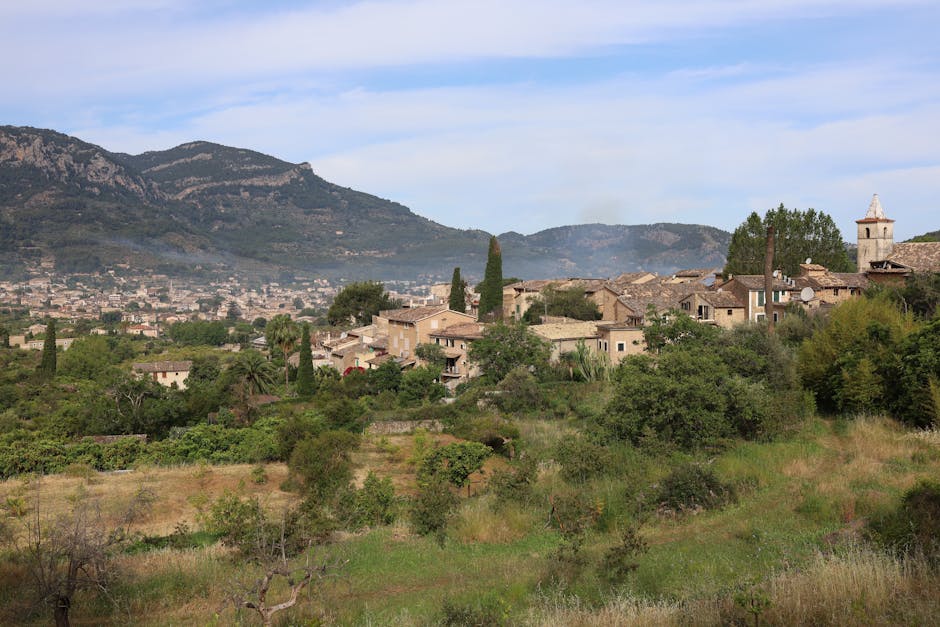
The Tramuntana is a steep mountain range along the northwest coast, and its terraced slopes, dry-stone walls, old water systems and stone villages are part of a cultural landscape on the UNESCO World Heritage List (inscribed in 2011). That means it is a place to walk, look and stay still, not a place for beach days.
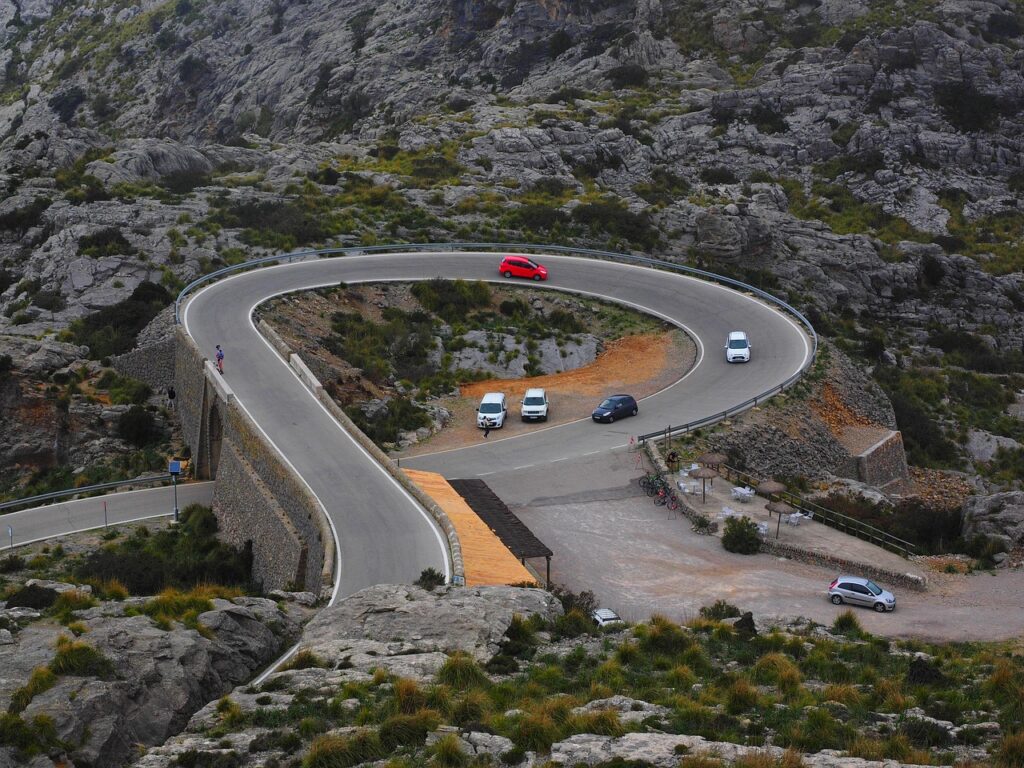
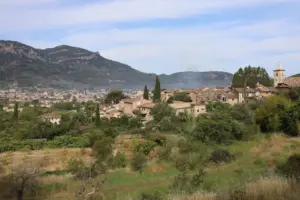
Typical bases are Sóller, Valldemossa and Deià, plus quieter hamlets in between. Fincas and small guesthouses in the hills are common here. Roads are narrow and winding, so allow more time than the map suggests, and think twice about driving a large car.
Sóller is the easiest mountain base to reach without a car. A historic train runs between Palma and Sóller, and a tram links Sóller with Port de Sóller on the coast, so you can combine mountains and a swim in one stay. Check the current timetable and tickets on the operator’s website before you plan around it.
Find a hotel for your Spain trip
Flight plus hotel for the mainland coasts, searchable by date and budget.
Show Spain offersIs the north of Mallorca good for a calm stay?
The north around Pollença and Alcúdia is a good choice if you want a sheltered bay, a seafront promenade and shops and restaurants within walking distance. It is also the most practical area for combining a retreat with sightseeing, because the old towns of Pollença and Alcúdia, the Formentor peninsula and the mountains are all within a short drive.
Expect more visitors here in summer than in the mountains. If your retreat is built around quiet, book it for spring or autumn, or choose a property in the hills behind the coast rather than directly on the beach.
Where are the quietest beaches and rural stays?
The southeast, around Santanyí and the coast towards Cala d’Or, is known for small coves with clear water and a rural interior of farmland, stone walls and country lanes. It is the best region for people who prefer to swim in a calm cove, cycle on flat roads and eat at a village restaurant in the evening.
This is the area where a car helps most. Public transport reaches the main towns, but the coves and many country properties are some distance from the nearest stop. If you do not want to drive, ask the retreat whether it arranges transfers and what is included.
Is Palma worth including in a retreat trip?
Yes, even if you stay elsewhere, because Palma is the island’s only large city and the hub of its transport. It has the cathedral on the waterfront, an old town of narrow lanes and courtyards, markets, galleries and a long seafront promenade.

For a retreat, Palma works as an arrival or departure stop. Spend one night there before or after your stay, or make it a day trip from a base within reach of the train or bus network. Palma is also the right choice if your programme is short and you would rather not spend hours on the road.
When is the best time to visit Mallorca?
Spring (April to June) and autumn (September and October) are the best seasons for a retreat: warm enough to swim in autumn, mild enough to walk, and quieter than the peak. July and August are the hottest months and the busiest, and prices and crowds rise with them.
Winter is calm and good for walking and wellness, but some seasonal businesses close and the sea is too cold for most people. If you plan hikes in the Tramuntana, avoid the middle of the day in summer and check conditions before you go. The island’s tourism board lists seasonal information by region.
How do you get from Palma airport to your retreat?
Palma de Mallorca Airport is on the edge of Palma, so the city and its main roads are close. Your options are a taxi, a rental car, a transfer arranged by the retreat, or public transport to Palma and onwards.
Island-wide public transport is run under the TIB brand, which lists airport connections, buses, the Palma Intermodal Station and fares on the official TIB website. If your retreat is in the Tramuntana or the southeast, ask the host whether pick-up from the airport is offered; many properties will arrange it, and it is easier than finding the last stretch of road on your own.
What should you eat on a Mallorca retreat?
Eat local and seasonal: sobrassada (a soft cured sausage), tumbet (layered vegetables), pa amb oli (bread with olive oil and tomato), fresh fish near the coast and ensaïmada (a spiral pastry) for breakfast. The island also produces olive oil and wine, and many fincas serve their own produce.
If you follow a special diet, say so at booking, not on arrival. A good retreat kitchen can adapt, but it needs notice.
FAQ
Do you need a car on a Mallorca retreat?
It depends on the region. In Palma and Sóller you can manage without one, because of the bus, train and tram links. In the southeast and in remote parts of the Tramuntana a car or a pre-arranged transfer is much easier.
What is the best time to visit Mallorca for a quiet retreat?
Spring and autumn. You get mild weather and fewer people than in July and August. Winter is the quietest, but check that your retreat and local restaurants are open.
What languages are spoken in Mallorca?
Catalan (in its Mallorcan form) and Spanish are the official languages. In hotels, restaurants and retreats you can get by in English, and in many places in German.
Is Mallorca suitable for solo travellers?
Yes. Retreats often include group meals and activities, which makes it easy to meet people, and Palma and the bigger resort towns are straightforward to move around alone. Ask the host about transfers if you arrive late in the evening.
Which region is best for walking?
The Serra de Tramuntana. It has terraced paths, old stone routes between villages and views over the coast. Wear proper footwear, carry water and plan your walk to end before dark.
Can you combine a retreat with sightseeing?
Yes. From a base in the north you can reach Pollença, Alcúdia and the mountains easily, and from Sóller or Palma you can visit the cathedral and the old town. Leave at least one free day so the retreat does not turn into a schedule.
For a trip that fits your dates and region, we can compare options for you through Travelissimo’s booking service. For ideas on keeping costs down on the Spanish mainland, see our tips for cheap travel in Spain.
Image credits: Pexels; Pixabay / Hans; Pixabay / Medienservice
 Seychelles with Kids: Beaches, Reserves and Turtles
 A Week on a Yacht: Daily Life, Space, Seasickness and Cost
 Yacht Charter in Malta: What to Know Before You Book
 How to Behave at a Maltese Festa: A Visitor’s Guide