
7 min read · Published: June 10, 2024 · Updated: October 30, 2026 · Prices and details checked: October 2026
A week on a yacht is a slow, simple holiday: you sleep in a small cabin, spend most of the day outdoors and move to a new bay or harbour every day or two. It suits people who value water, wind and flexibility more than room size and room service. If you can live with limited space and shared facilities, it is one of the few holidays where the setting changes every day without any packing.
Key takeaways
- A typical day has three parts: a short passage under sail or engine, a long swim and lunch stop at anchor, and an evening in a harbour or a quiet bay.
- Cabins are compact. Expect a double berth that you step around rather than walk around, limited storage and shared bathrooms on most boats.
- Seasickness is manageable for most people if you prepare before departure and choose calm days for longer passages.
- The trip works best for couples, friends and families with children who are comfortable around water, and less well for guests with serious mobility problems.
- Compare cost per person for the whole week, including food, fuel and harbour fees, not just the headline boat price.
Table of contents
What does a normal day on a yacht look like?
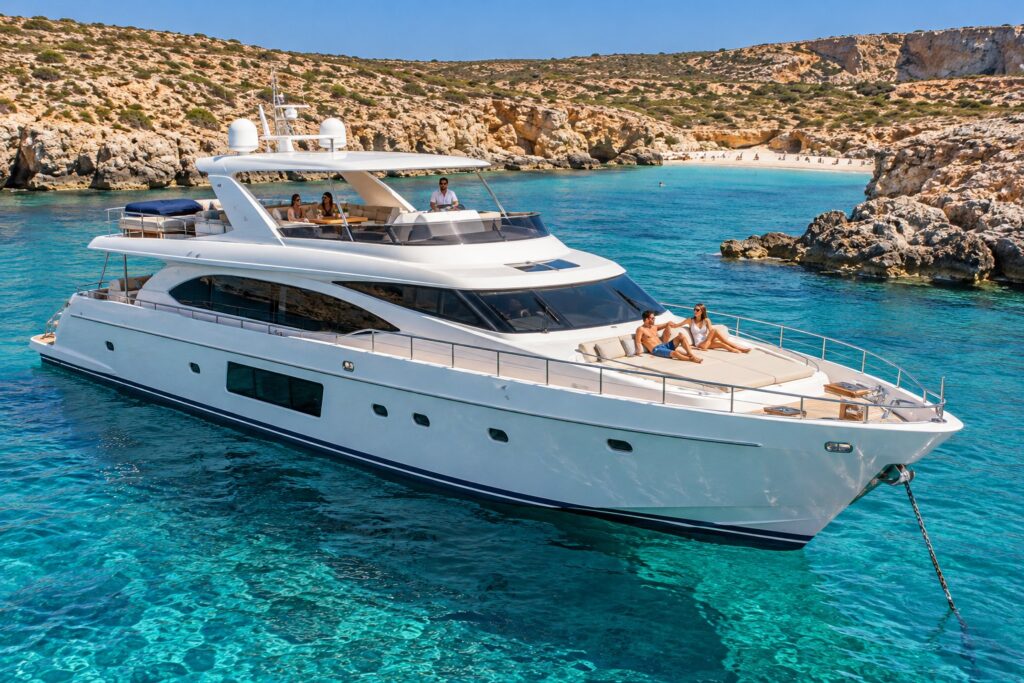
Most days follow the same rhythm: breakfast on board, a passage of a few hours, a swim stop at anchor, a late lunch, and then a harbour or a sheltered bay for the night. The skipper sets the pace around wind and weather, and you can shift the plan in either direction, for example by staying an extra morning in a bay you like.
 AI-generated
Mornings start early because the sea is usually calmest then and anchorages are still quiet. Breakfast is simple: bread, fruit, coffee, whatever was bought in the last harbour. Between bays, guests help as much or as little as they like. Some people take a turn at the helm or pull a rope, others read on deck. Nobody needs to know how to sail.
Lunch happens at anchor, with the engine off and the swimming ladder down. Afternoons are for snorkelling, paddling, sleeping or a short sail. In the evening you either tie up in a marina, where you can walk to a restaurant, or stay at anchor and cook on board. Dinner at a quayside table and dinner in the cockpit under the stars are both part of the week, and many groups alternate between them.
Where do you sleep, and how much space do you get?
You sleep in a cabin with a fixed berth, and you share the rest of the boat with everyone else. Space is the biggest difference to a hotel, so it is worth knowing what to expect before you book.
A cabin usually holds a double berth, a small locker and a hatch for air. There is often just enough floor to stand beside the bed. Bathrooms are called heads on a boat. Many yachts have one or two for the whole group, and showers are short because fresh water is limited. Use a soft bag rather than a hard suitcase, since a hard case has nowhere to go once unpacked.
Common areas make up for the small cabins. The cockpit, the deck and the saloon are where most of the day is spent, so the number of cabins matters less than whether the group gets along. On a hot night, many guests move to the deck cushions instead of the cabin.

Ready to book? Search flight and hotel
Packages, hotel only or flight only, searchable by destination, date and budget.
Show Travel Tips offersWhat if you get seasick?
Most people who feel unwell on a yacht recover within a day, and a few simple habits reduce the risk a lot. The main points are to prepare before leaving, stay outside, and avoid long passages on windy days.
- Talk to a pharmacist or doctor before the trip about a remedy that suits you, and take it as advised, usually before you feel ill rather than after.
- Eat light, regular meals and drink water. An empty stomach and heavy, greasy food both make it worse.
- Stay in the cockpit or on deck and look at the horizon. Time spent below deck, especially reading or looking at a phone, is the common trigger.
- Sit near the middle of the boat, where the motion is smallest.
- Ask the skipper to plan the longest passage for the calmest morning. Short hops between bays are rarely a problem.
If the first day is rough, tell the crew early. A skipper can shorten a leg, change course to a sheltered bay or simply stop for a swim.
Who is a week on a yacht right for?
It fits groups who like being outdoors together and who can accept a few trade-offs: less privacy, less space, and plans that depend on the weather. It is a poor fit for people who need a lot of room, a private bathroom with unlimited hot water, or step-free access.
Couples enjoy the quiet bays and the lack of schedule. Friends and extended families usually do best when the group fills the cabins and everyone knows how to share. With children, check the age and swimming ability of each child, and agree on life jacket rules with the skipper on the first evening. Rules on deck are strict for a reason: moving boats and wet surfaces are the main risks, and a skipper will ask everyone to follow the same basics from the start.
If you are unsure, a single day trip is a sensible test before committing to a week. It shows you how you handle motion, sun and a small space.
How much does a week on a yacht cost compared with a hotel holiday?
The price depends on the boat, the season and the crew, so there is no single number that applies to everyone. The useful comparison is cost per person for the whole week, with all extras counted, against a hotel week with meals, transfers and activities.
The boat price is shared among everyone on board, so a full boat is where yacht holidays compete best. A half-empty boat is not good value. Check what the price covers: crew, fuel, harbour and mooring fees, bed linen, final cleaning and food are often handled separately. Food is cheaper than eating out every evening if you cook some meals on board. Fuel and harbour fees rise with the distance and the number of nights spent in marinas.
Seasonality matters as well. Peak summer weeks cost most, while late spring and early autumn are cheaper and usually still warm enough for swimming. Ask for a written list of what is included before you pay a deposit.
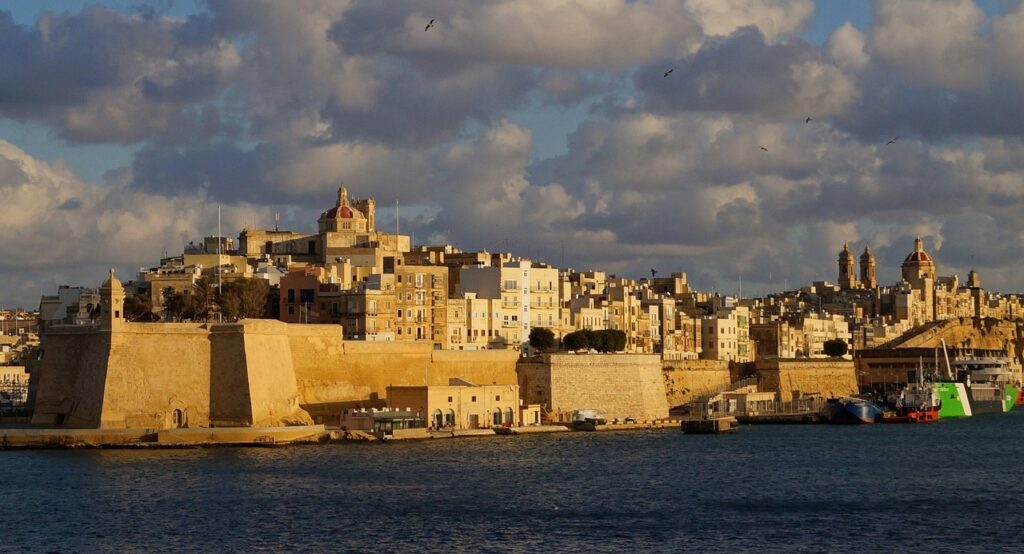
For the basics of how charters work, see our guide on what to know before you go. To compare boat types, read how to choose the perfect yacht. For bays and anchorages, see yacht charters and activities in Malta.
FAQ
Do I need sailing experience for a week on a yacht?
No. With a skipper on board, you do not need any experience. You can join in with ropes and sails if you want, or stay out of the way. If you charter without a skipper, a licence and proven experience are required, which is a different type of trip.
What should I pack for a week on a yacht?
Pack light in a soft bag: swimwear, a hat, sunglasses with a strap, sunscreen, a light jacket for evenings and shoes with non-marking soles. Hard-soled shoes damage the deck and are usually not allowed. Bring a towel for each person and any medication you use.
Is there enough fresh water and power on board?
Water and power are limited, so short showers and sensible phone charging are the norm. In marinas the boat connects to shore power and water, which makes charging and washing easier. At anchor, the batteries and the water tank are what you have.
What happens if the weather turns bad?
The skipper decides whether it is safe to sail, and safety comes before the plan. Typical options are staying in the harbour, taking a shorter leg or changing to a more sheltered bay. Build a spare day into the week so a delay does not cost you a highlight.
Can the itinerary change during the week?
Yes. The route is a plan, not a timetable. You can stay longer in a bay you like or skip a harbour you do not, provided wind, sea state and the next day’s distance allow it.
Is a yacht holiday suitable for a family with children?
It can be, if the children can swim or wear life jackets reliably and are happy in a small space. Younger children need constant supervision on deck. Talk to the skipper about safety rules before you set off.
If you want a week on the water arranged for you, we can help with yacht charter and other trips through our booking page.
Image credits: Pexels; AI-generated | Travelissimo; Pixabay / MarcinCzerniawski
 Seychelles with Kids: Beaches, Reserves and Turtles
 Yacht Charter in Malta: What to Know Before You Book
 How to Behave at a Maltese Festa: A Visitor’s Guide
 Things to Do in Pretoria: A Day Trip Plan from Johannesburg