8 min read · Published: June 22, 2024 · Updated: October 29, 2026 · Prices and details checked: October 2026
Most practical questions about a Malta trip have short answers: a week is a good length, the airport bus costs the same as any other bus ride, you do not need a rental car for the main sights, and your European plug will not fit the socket. This guide covers the decisions you make before departure and in the first hour after landing. For the case for Malta itself, read our first-time visitor overview. Here we stick to logistics.
Key takeaways
- A long weekend covers Valletta and one base town; a full week adds Gozo, a boat day and time at the beach without rushing.
- The X routes from Malta International Airport are regular public buses: a single ticket costs 2.00 euro in winter and 2.50 euro in summer, valid for two hours including transfers.
- Skip the rental car if you stay in Sliema, St Julian’s or Valletta. Traffic is on the left, parking is scarce and the bus network reaches the main sights.
- Sockets are the British type G. Mainland European plugs need an adapter, not a voltage converter.
- Tap water is safe but desalinated and tastes of it. On Sundays most shops close and St John’s Co-Cathedral is shut, so plan a beach, market or Gozo day instead.
Table of contents
How many days do you need for Malta?
A week is the length we recommend for a first visit: enough for Valletta, the Three Cities, Mdina, a day on Gozo and a day on or in the water, with a slow afternoon left over. The islands are small, so distances are not the issue. The issue is that buses take longer than the map suggests.
A long weekend works if you limit yourself to one base and one excursion. Sliema or Valletta plus a half day in Mdina is realistic; adding Gozo to a short trip means spending most of one day in transit. Two weeks suit anyone who wants to split the stay between Malta and Gozo, or who combines sightseeing with remote work.
How do you get from the airport to your accommodation?
Malta has one airport, Malta International Airport near Luqa in the south, and the cheapest way onward is the public bus: the express routes X1 to X4 fan out from the forecourt to the main tourist areas, and a single ticket costs 2.00 euro in winter and 2.50 euro in summer. The ticket is valid for two hours with free changes, so you can switch to a local bus at the end of the line without paying again. The route boards at the airport stop show which X route serves your destination. There is no train or tram in Malta, so the alternatives are a taxi, a pre-booked transfer or a hire car, and a taxi is the sensible choice late at night when buses run less often.
If you plan to use buses throughout the stay, buy a pass at the airport sales office instead of single tickets. The Explore card for seven days costs 25.00 euro for adults and covers day and night routes; the Explore Flex version costs 27.00 euro for seven days or 21.00 euro for four days and also includes the airport direct services. Children aged four to ten pay 7.00 euro for the seven-day Explore Child card, and children under four travel free. A 12 Single Day Journeys card for 19.00 euro suits anyone who mostly walks; it can be shared and stays valid for six months.
Two things to know before you board. Night routes marked with an N cost 3.00 euro per ride, and the Tallinja Direct express services cost 3.00 or 3.50 euro and are not covered by the standard Explore card. Travelling without a valid ticket carries a 50 euro penalty.
Combine your trip with a hotel in Malta
Flight plus hotel in Sliema, St. Julian's or Gozo for your dates and budget.
Show Malta offersDo you need a rental car in Malta?
For a stay based in Sliema, St Julian’s or Valletta, no. Traffic drives on the left, roads around the harbour towns are congested for much of the day, and parking near the promenade or inside Valletta is scarce enough that locals avoid driving there. Buses and the harbour ferries get you to every major sight, and a taxi for the odd late evening is cheaper than a week of parking stress.
A car makes sense in three cases: you stay in the north or on Gozo and want to reach small bays without timetables, you travel with young children and a lot of gear, or you plan several day trips to places the bus serves only rarely. Gozo in particular rewards having a car, and you can take a hire car across on the Gozo Channel ferry from Cirkewwa for 15.70 euro per standard car with driver; the crossing takes about 25 minutes. If you hire, pick a small car. Village streets were laid out for carts.
Without a car, the ferries do a lot of the work. The Valletta Ferry Services boat from Sliema to Valletta runs every 30 minutes and costs 3.00 euro one way or 5.00 euro return, and the Gozo fast ferry from Valletta takes around 45 minutes to Mgarr. Our Gozo guide covers getting around once you are there.
Which SIM card, plugs and apps should you sort out before departure?
If you carry an EU SIM card, your home plan works in Malta at domestic rates under EU roaming rules, so there is nothing to buy. Visitors from the United Kingdom and other non-EU countries should check their operator’s roaming terms; a local prepaid SIM from one of the Maltese networks or an eSIM bought online before departure is usually cheaper than paying roaming by the day, and an eSIM installed at home means you have data the moment you land.
Malta uses the British three-pin type G socket. Mainland European two-pin plugs do not fit, so bring adapters; a power strip with your home sockets plus a single adapter covers the whole family. The voltage matches mainland Europe, so phones, laptops and hairdryers work without a converter.
Download the Tallinja app for live bus times before you fly. English is an official language, so signs, menus and announcements need no translating.
Can you drink the tap water in Malta?
Tap water in Malta is safe to drink, but most of it is desalinated seawater and it tastes of salt and chlorine, so most visitors and many residents drink bottled or filtered water. For brushing teeth, cooking and making tea it is fine. In a holiday apartment, a jug filter or a few large bottles from the supermarket solve the taste problem, and a refillable bottle topped up at home is cheaper than buying small bottles in tourist areas all day, which matters in summer heat.
What closes on Sundays and public holidays?
On Sundays most shops in Malta are closed, and several major sights have fixed closing days, so a Sunday is best planned around a beach, a market or an outdoor route. St John’s Co-Cathedral in Valletta is open Monday to Saturday from 09:00 to 16:45 and closed on Sundays and public holidays, which surprises visitors who save Valletta for the last day. Heritage Malta sites close on 1 January, Good Friday, 24, 25 and 31 December, and last admission everywhere is 30 minutes before closing time.
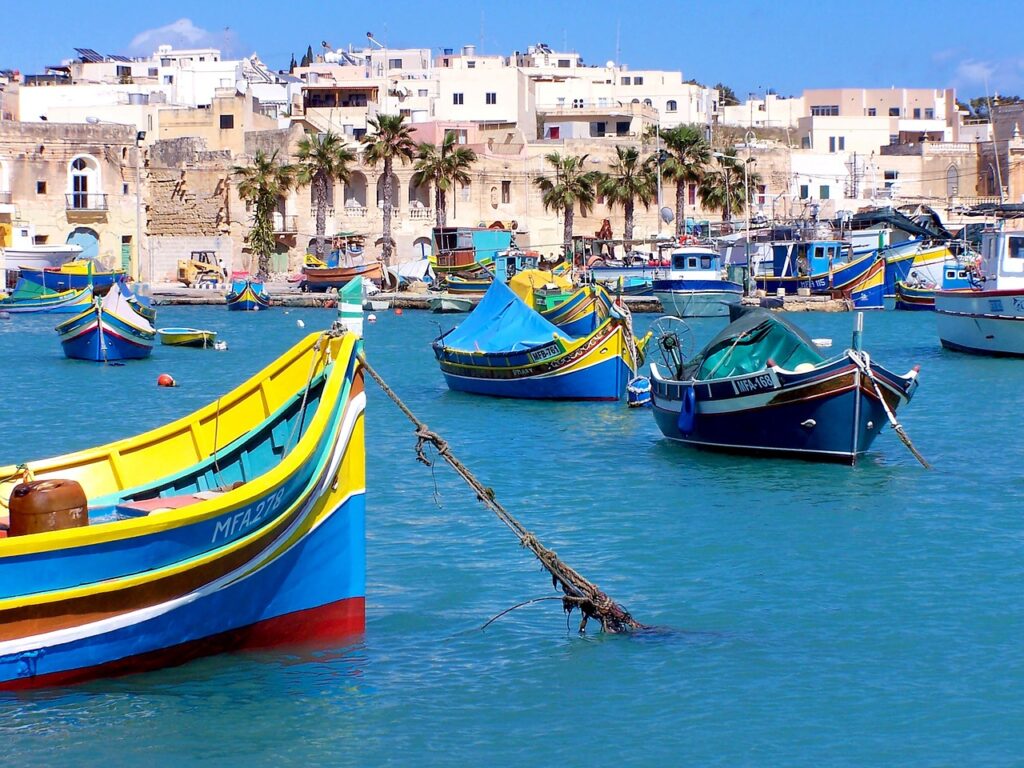
Sunday morning is the time for the fish market in Marsaxlokk, which is busiest early, and summer festas peak at the weekend, so ask your host which village is celebrating. Supermarkets in the tourist towns usually open on Sunday with shorter hours; if you are self-catering, do the big shop on Saturday. Buses run on Sundays with a thinner timetable.
FAQ
Do EU citizens need a passport for Malta?
Malta is in the EU and the Schengen area, so EU citizens can enter with a valid national ID card or passport. Travellers from outside the EU should check whether they need a visa and whether their passport meets Schengen validity rules. Carry the original document, not a photo.
Is Malta expensive compared with the rest of Europe?
Public transport and museum entry are inexpensive, while restaurants and summer accommodation in Sliema and St Julian’s are priced like other Mediterranean resort areas. Self-catering keeps daily costs down. Accommodation also carries an environmental contribution of 0.50 euro per adult per night, capped at 5.00 euro per person per stay, usually paid on arrival.
What is the best season for a first Malta trip?
Spring and autumn give warm days without the peak summer heat and crowds, and the sea stays pleasant for swimming well into autumn. Summer is hot and busy but has the village festas and the longest ferry timetables. Winter is mild, quiet and cheaper, with some seasonal boat services reduced.
Is Malta safe for solo travellers and families?
Malta is one of the safer destinations in Europe, and walking around Sliema, Valletta or St Julian’s in the evening is normal. The usual care applies in the nightlife area of Paceville late at night. The main hazards are the summer sun and uneven pavements, so pack a hat and decent shoes.
Once you have decided on the length of the trip and whether you want a car, the rest falls into place: pick a base, buy a bus pass on arrival and leave Sundays free for the coast. If you want a self-catering base with a kitchen for the week, our holiday apartments in Sliema and St Julian’s sit a short walk from the ferry and the main bus stops: holiday apartments in Malta.
Image credits: Pixabay / Hobbyfotography; Pexels; Pixabay / magyi; Pixabay / JonHoefer
 Holiday Apartment or Hotel? How to Choose and Book Well
 Best Beaches in Europe 2027: Eight Beaches and How We Chose Them
 Most Popular Cities in Europe 2027 and When to Go
 Summer Holidays 2027: When to Book and Where to Go