
8 min read · Published: April 15, 2024 · Updated: October 30, 2026 · Prices and details checked: October 2026
A yacht charter in Malta comes down to four decisions: whether you sail yourself or take a skipper, whether your licence is accepted, which month you go, and how the deposit and the extras work. This page covers these basics for a first charter around Malta, Gozo and Comino.
Key takeaways
- Bareboat means you are the skipper and carry the responsibility; a skippered charter puts a licensed local at the helm and lets everyone on board be a guest.
- For a bareboat you need a recognised certificate of competence, usually the ICC or an equivalent national licence, plus proof of recent experience.
- The season runs from spring to autumn; July and August are the warmest and busiest months, the shoulder months give calmer anchorages and better availability.
- Every charter company blocks a security deposit before you leave the berth; a damage waiver reduces it but never removes it.
- Charters start from Msida and Ta’ Xbiex in Marsamxett Harbour, from Portomaso in St Julian’s or from Mgarr on Gozo.
Table of contents
Bareboat or skippered: which charter type suits you?
Choose a bareboat only if you hold a valid licence, have skippered a boat of similar size recently and are comfortable anchoring in a crosswind. Everyone else is better off with a skipper, and that is the choice most visitors make in Malta.
A bareboat charter hands you the boat, the keys and the paperwork. You plan the route, read the forecast and answer for the boat when something goes wrong. Charter companies in Malta check this seriously: they want to see the licence and ask about your recent miles, and some do a short handover sail first.
A skippered charter adds a professional who knows the local anchorages and wind patterns. You still decide where to go, the skipper tells you if the plan is safe that day. On a day charter the skipper is almost always included; on a weekly charter you pay the skipper separately and provide a berth and meals. A crewed charter adds a hostess or cook for groups who prefer to be served.
Which boat type fits your group, sailing yacht, catamaran or motor yacht, is a separate question that we cover in how to choose the right yacht for Malta.
Which licence do you need to charter a yacht in Malta?
For a bareboat sailing yacht the standard requirement is the International Certificate of Competence (ICC) or a national licence the charter company accepts as equivalent, such as an RYA Day Skipper certificate or the German Sportküstenschifferschein. For a motor yacht the licence must cover powerboats.
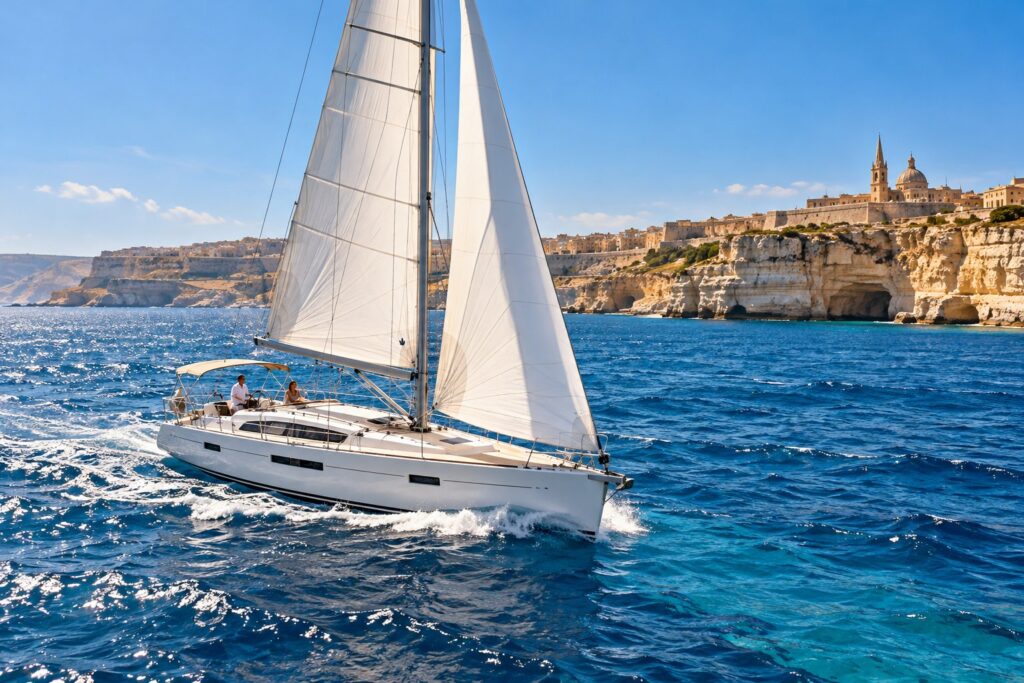 AI-generated
Bring the original document, not a photo. Many companies also ask for a sailing CV, a short list of boats you have skippered, where and for how long. A licence that covers only inland waters will be refused; Malta is open sea. A VHF radio certificate is often requested as well, because the radio may only be operated by a certified person.
For a skippered charter you need no licence and no proof of experience. Children are welcome on most boats as long as the company knows their ages in advance for life jackets.
Combine your trip with a hotel in Malta
Flight plus hotel in Sliema, St. Julian's or Gozo for your dates and budget.
Show Malta offersWhen is the best season for a yacht charter in Malta?
The charter season in Malta runs from spring to autumn, and the best balance of warm sea, settled weather and free anchorages is in the shoulder months on either side of the summer peak.
July and August bring the hottest days and the warmest water, but also the fullest anchorages: the Blue Lagoon on Comino fills with day boats by late morning, and marina berths are tight. If you charter then, book well ahead and plan early departures. May, June, September and early October are quieter, the sea is still warm enough to swim, and companies have more boats free. Some operators run skippered day charters in winter when the forecast allows; a weekly bareboat in winter is rare.
Wind shapes every day on the water. The prevailing north-westerly Majjistral exposes the north and west coasts and shelters the eastern bays and the southern coast; a north-easterly Grigal turns that around. Your skipper or the base will read the forecast with you; on a bareboat, check it every morning before you lift the anchor.
Which marinas do charters start from?
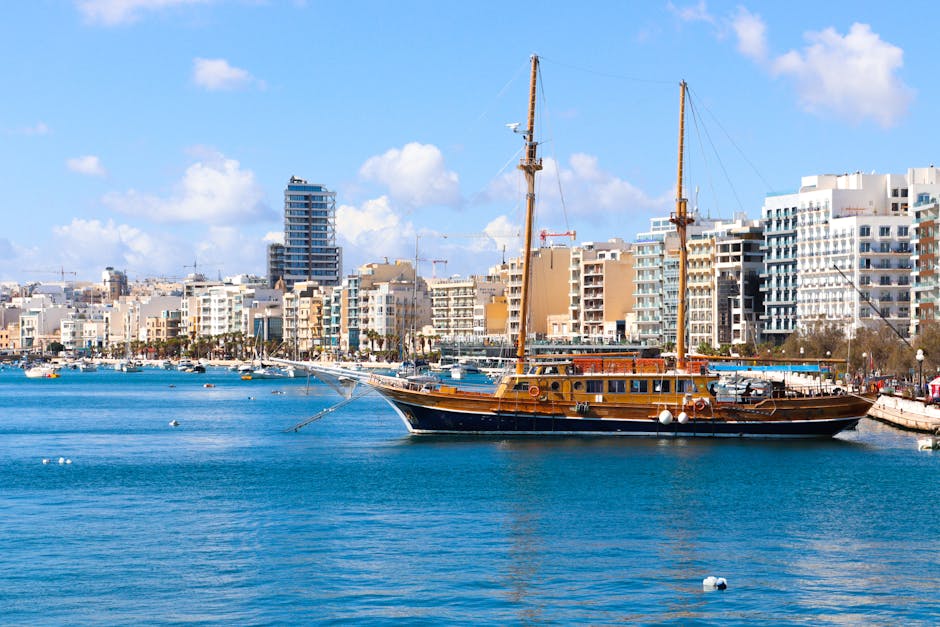
Most charters leave from Marsamxett Harbour, where Msida Marina and the neighbouring Ta’ Xbiex quays hold the largest number of charter boats, or from Portomaso Marina in St Julian’s. On Gozo, Mgarr Marina is the base for charters that focus on Gozo and Comino.
Msida and Ta’ Xbiex sit on the Sliema side of Valletta. You motor out past Manoel Island and the Valletta bastions and are in open water quickly. Supermarkets, chandlers and bus stops are close, and if you stay in Sliema or Gzira beforehand you can walk to the marina.
Portomaso in St Julian’s is smaller, surrounded by hotels and restaurants, and the usual base for motor yachts and day charters. Mgarr on Gozo puts you next to Comino from the first hour, so you spend less time crossing and more time at anchor. The Grand Harbour Marina in Vittoriosa mainly hosts larger yachts.
What is included in the charter price, and what is not?
The base price normally covers the boat, its standard equipment, a safety briefing, bed linen and towels, a dinghy and third party insurance. Fuel, the skipper’s fee, final cleaning, mooring fees away from the home berth and provisioning are usually charged on top.
Read the extras list before you compare offers, because two quotes with the same base price can differ a lot. Typical items to check:
- Fuel: paid on return according to use, or a flat fee on day charters.
- Skipper and hostess: a daily fee each, plus their food.
- Final cleaning: often mandatory, sometimes already in the price.
- Outboard for the dinghy, paddleboards, snorkelling gear: optional extras on most boats.
- Mooring fees in other marinas, for example an overnight stop in Mgarr.
Ask for a written inventory of what is on board. For what to do once you are out there, see our article on yacht charter activities in Malta.
How does the security deposit work?
Before departure the charter company blocks a security deposit on the skipper’s credit card and releases it after the check-in at the end of the charter if the boat comes back undamaged and with full tanks.
The deposit is your maximum liability per incident under the hull insurance. A scraped gelcoat, a lost fender or a torn sail is settled from it. For a bareboat the deposit is a meaningful sum, which is why most companies offer a damage waiver: you pay a non-refundable fee and the deposit shrinks. A reduced deposit still applies, and gross negligence or damage to the dinghy are often excluded. On skippered charters the deposit is usually lower or waived, because the skipper carries the responsibility.
Three habits protect your deposit. Photograph the hull, sails and inventory at check-in and note every scratch on the handover sheet. Keep fuel receipts if you refill away from base. Return on time: a late return because of weather is understandable, one because you stayed too long at the Blue Lagoon is not.
FAQ
Can I charter a yacht in Malta without any sailing experience?
Yes, with a skipper. Skippered day and weekly charters are the normal choice for visitors without a licence. You decide where to go, the skipper handles the boat and tells you which bays are safe in the day’s wind.
Is a day charter or a week better for a first time?
A day is enough to reach Comino and the bays of northern Malta, and it shows whether your group enjoys life on board. A week lets you circle Malta and Gozo and anchor overnight in bays that are crowded by midday.
Do I need to bring my own food and drink?
On a bareboat, yes; you provision in Sliema, Gzira or Msida before you cast off. On a skippered charter you can shop yourself or ask the base to provision against a list, which costs more but saves a morning. Crewed charters usually include catering by arrangement.
Are children allowed on a yacht charter?
Yes. Give the company the ages when you book so that child-sized life jackets are on board. On a sailing yacht young children need constant supervision on deck; a catamaran with its flat deck and netting is the easier boat for families.
What happens if the weather is too bad to sail?
The skipper or the base decides whether the boat leaves. On a day charter you are normally offered another date or a refund. On a weekly charter you wait in the marina or a sheltered anchorage until the wind drops; days lost to weather are part of sailing and are not refunded.
Decide first whether you want to skipper or be a guest, then check your licence and pick a month outside the August peak if you can. If you would like us to arrange a skippered charter from Malta or Gozo, or to combine a few days on the water with a stay in one of our apartments in Sliema or St Julian’s, send us your dates through the booking page and we will put a proposal together.
Image credits: AI-generated | Travelissimo; Pexels; Pixabay / Cathalin
 Seychelles with Kids: Beaches, Reserves and Turtles
 A Week on a Yacht: Daily Life, Space, Seasickness and Cost
 Things to Do in Pretoria: A Day Trip Plan from Johannesburg
 Sicilian Cuisine: What to Eat, Drink and Order in Sicily