7 min read · Published: November 18, 2024 · Updated: October 29, 2026 · Prices and details checked: October 2026
Each Canary Island offers a different kind of trip, so the right choice depends on what you want to do. Tenerife and Gran Canaria suit a first visit with variety, Fuerteventura is the beach and wind island, Lanzarote has the most distinctive volcanic scenery, and La Gomera, La Palma and El Hierro are the quiet, green islands for walking. Below, every island appears once, with the type of traveller it fits.
Key takeaways
- Tenerife and Gran Canaria combine resorts, cities and mountains, which makes them the easiest first choice.
- Fuerteventura has over 150 km of white-sand beaches and is set up for windsurfing and kitesurfing.
- Lanzarote is a biosphere reserve with Timanfaya National Park and the work of the artist César Manrique.
- La Gomera, La Palma and El Hierro have few large resorts and are built around hiking, stargazing and natural swimming pools.
- Ferries link Tenerife with La Gomera, El Hierro and La Palma, so a two-island trip works without extra flights.
Table of contents
Which islands suit a first trip with plenty of variety?
Tenerife and Gran Canaria. Both have established beach resorts, historic towns and high mountain scenery within one island, so a mixed group will find something for everyone.
Tenerife
Tenerife is home to Teide, the highest peak in Spain at 3,715 metres, inside a national park listed as a UNESCO natural World Heritage Site. Fit hikers can climb on foot in about six hours, and a cable car reaches the top in a few minutes. The main resorts lie in the south, with fine-sand beaches and calm water, while the north has historic towns such as La Orotava, Puerto de la Cruz and San Cristóbal de La Laguna.
The southwest coast is regulated for whale and dolphin watching. Only authorised boats may operate, so book with a licensed operator, not an informal offer on the quay. For quieter swimming, look for the dark volcanic sand beaches and natural pools away from the large resorts.
Gran Canaria
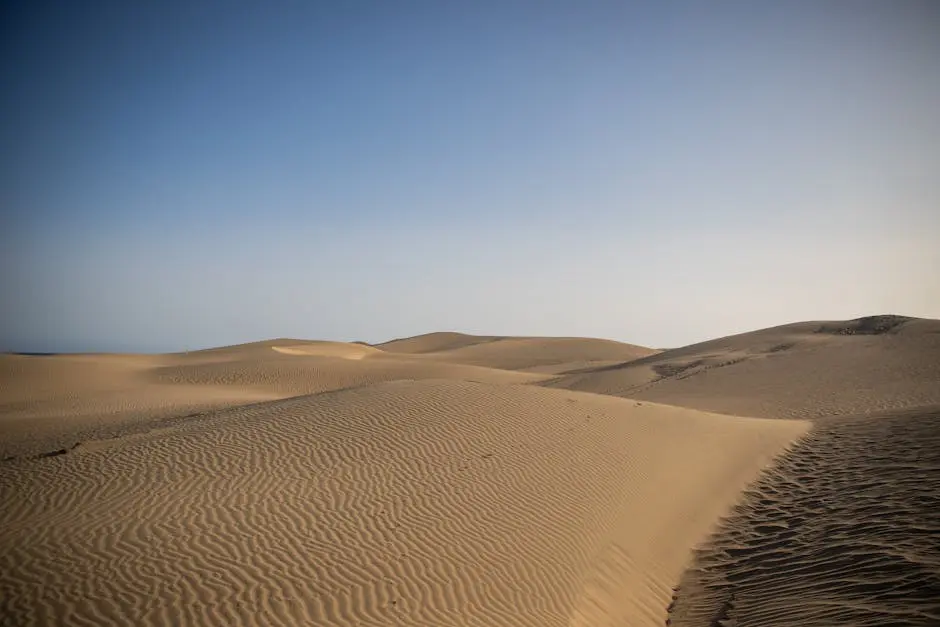
Gran Canaria is often called a miniature continent, and a large part of it is a biosphere reserve. The southern coast has the widest beaches and dune fields, including the Maspalomas dunes. The centre is mountainous: the trail to the volcanic monolith Roque Nublo suits almost every visitor, and Tamadaba Natural Park has a well-preserved pine forest.
Las Palmas, the capital, adds a city side to the trip, with museums in its historic quarter such as the Casa de Colón and El Museo Canario. The cultural landscape of Risco Caído and the Sacred Mountains is also a World Heritage Site.
Which island is best for beaches and wind sports?
Fuerteventura. The island’s tourism board describes more than 150 km of white-sand beaches with turquoise water, and windsurfing and kitesurfing are promoted as main activities. Corralejo, El Cotillo and Morrojable are among the beach areas the board features.
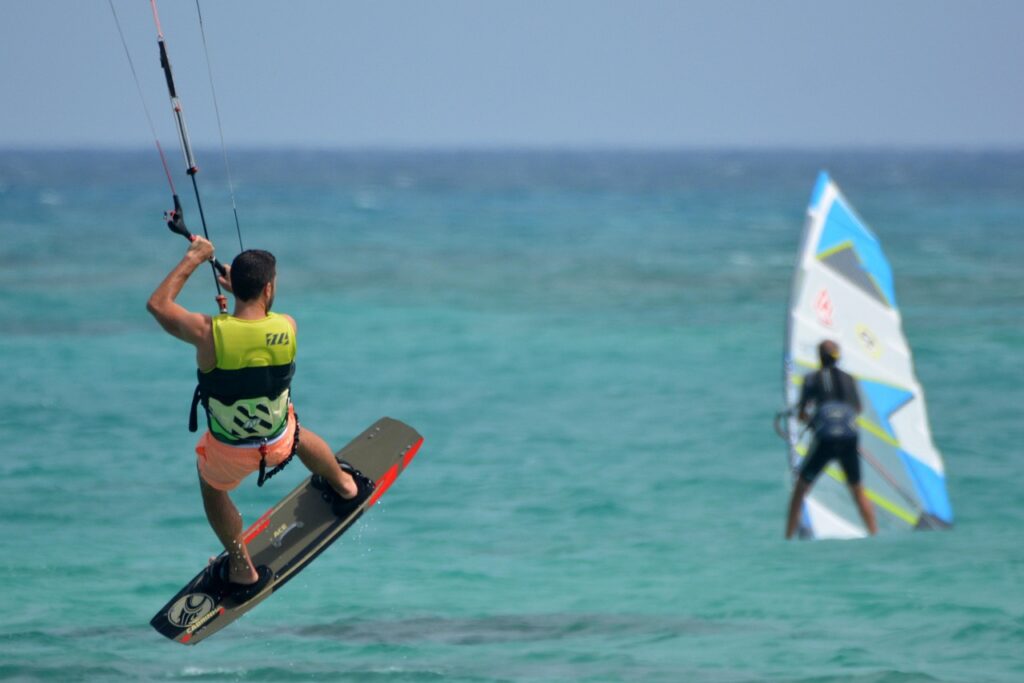
The wind that draws surfers also affects beach days, so bring a windbreak and expect to use it. The climate is mild all year, with an average temperature of about 22 °C according to the island’s official site, which means you can book in any season. The island is also quieter inland: Betancuria, the Tindaya mountain and the Las Peñitas trails suit a day away from the sand.
Find a hotel for your Spain trip
Flight plus hotel for the mainland coasts, searchable by date and budget.
Show Spain offersWhich island has the most unusual scenery?
Lanzarote. Timanfaya National Park shows volcanic activity at its most direct, and guided bus tours run through the Montañas del Fuego. The whole island is a biosphere reserve, and much of what you see was shaped by César Manrique, whose works include Jameos del Agua and the Mirador del Río. His former houses in Haría and Tahiche are now a museum and a foundation.
Wine is the second reason to come. In La Geria, vines grow in volcanic ash behind small stone walls, and some bodegas offer tastings of Malvasía Volcánica wines. Beaches have white or golden sand, and many are sheltered, which suits families with young children. Papagayo has full services.
Which islands are best for quiet walking and nature?
La Gomera, La Palma and El Hierro. None has the large resort areas of the bigger islands, and each rewards a week of walking, swimming in natural pools and slow days.
La Gomera
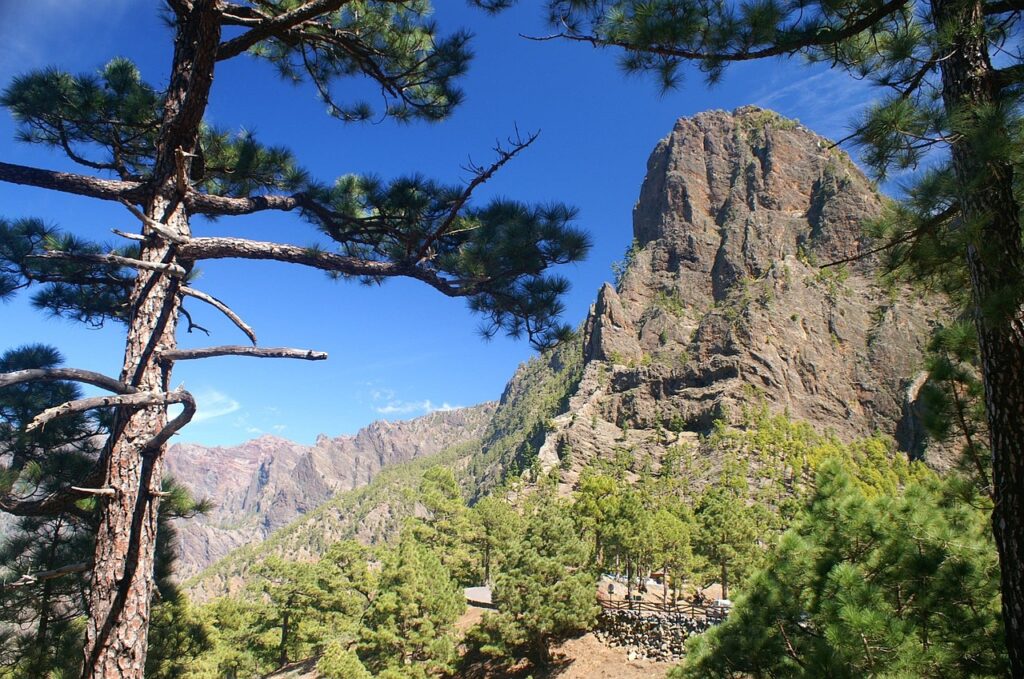
Garajonay National Park covers the centre of the island. About 70 percent of it is laurel forest, a relic of the subtropical forests that once covered much of Europe and North Africa, and a UNESCO World Heritage Site. Mist keeps it green even though the island is generally dry. The island promotes a large trail network, and the whistled language Silbo Gomero is part of its living culture. Valle Gran Rey is the main base for a longer stay, and ferries run between several coastal towns on the island.
La Palma
La Palma is a biosphere reserve and was the world’s first Starlight Reserve, which makes it the best choice for night skies. The Roque de los Muchachos observatory draws scientists, and the Caldera de Taburiente National Park has walls rising above 2,000 metres. Trails cross pine forest, laurel forest at Los Tilos and volcanic terrain, and the Ruta de los Volcanes runs from the summit to the coast. Swim at the lava pools such as La Fajana, and take care at Nogales beach, where currents are strong.
El Hierro
El Hierro is the youngest and one of the smallest islands, also a biosphere reserve, and it has very few beaches. Swimming happens in natural pools: Charco Azul, La Maceta, Tamaduste and La Caleta. Divers get the most from it, with more than 40 dive sites and a marine reserve at La Restinga. Plan it as a place to slow down, not as a beach holiday.
How do you travel between the islands?
By ferry or by plane. Fred. Olsen Express lists crossings from Los Cristianos in southern Tenerife to San Sebastián de La Gomera in 50 minutes, to Valverde on El Hierro in 140 minutes and to Santa Cruz de La Palma in 150 minutes. Fuerteventura and Lanzarote are connected by a short crossing of 25 or 35 minutes, depending on the sailing. Schedules change by season, so confirm them with the operator before you plan a tight itinerary.
Binter, the regional airline founded to link the islands by air, covers the longer hops. We recommend a base-plus-day-trip plan: stay on one island and visit a neighbour for a day, instead of changing hotels every two nights. Moving between islands costs half a day each time.
FAQ
Which Canary Island is best for a first visit?
Tenerife or Gran Canaria. Both have resorts, towns, mountain scenery and good transport, and both offer day trips that fill a week without moving hotels.
Which island is best for quiet and nature?
La Gomera, La Palma or El Hierro. La Gomera has the laurel forest of Garajonay, La Palma has the best stargazing and El Hierro has natural swimming pools and diving.
Which Canary Island is best for kitesurfing and windsurfing?
Fuerteventura. Windsurfing and kitesurfing are core activities there, and the island’s tourism site promotes the conditions for both.
Can I visit two islands in one trip?
Yes. Tenerife pairs easily with La Gomera, El Hierro or La Palma by ferry from Los Cristianos, and Fuerteventura pairs with Lanzarote via the short crossing between them. Allow a full day for each transfer.
Do the Canary Islands suit a trip outside summer?
Yes. Official island sites describe a mild climate all year, so the islands work in any season. Pick the island by activity, since coasts facing the wind and mountain areas feel different from sheltered beaches.
Next step
Choose the island by what you want to do each day, then build the trip around one base. If you want a Spanish island comparison from the Mediterranean side, our Mallorca retreat guide covers retreat types there. We arrange flights, accommodation and transfers for Spain and the Canary Islands through our booking service.
Image credits: Pixabay / marcinjozwiak; Pexels; Pixabay / Ben_Kerckx; Pixabay / Rettenberg
 Holiday Apartment or Hotel? How to Choose and Book Well
 Best Beaches in Europe 2027: Eight Beaches and How We Chose Them
 Most Popular Cities in Europe 2027 and When to Go
 Summer Holidays 2027: When to Book and Where to Go