
8 min read · Published: February 19, 2024 · Updated: October 29, 2026 · Prices and details checked: October 2026
In Spain, the same plate costs different amounts depending on where you stand or sit, and the same bed costs different amounts depending on the category of the building. Eating at the bar and booking a hostal or a private hostel room beats almost any other food and lodging choice on a budget. Below is how the pricing works, what to order and what turns up on the bill later. For timing, flights and city passes, see our general guide to cheap travel in Spain.
Key takeaways
- The same tapa, ración or pincho is cheapest at the bar (barra), dearer at a table inside and dearest on a terrace in a main square.
- A hostal is a small guesthouse, not a hostel: private rooms at a fraction of hotel rates, often with a shared or private bathroom.
- Prices fall fast once you leave Madrid, Barcelona, San Sebastián, Ibiza and the main Andalusian coast towns.
- Catalonia charges a tourist tax per person per night, and Barcelona adds its own municipal surcharge on top.
- A bakery breakfast and a bocadillo for lunch cost less than a hotel buffet and a sit-down meal, and they taste more local.
Table of contents
Why does the same plate cost more at a table than at the bar?
Because many Spanish bars have separate prices for the bar, the indoor tables and the terrace, and the terrace in a tourist square is the most expensive of the three. Lists are often printed with two or three columns, or posted on the wall behind the counter. If you see only one price and no table service, you are almost certainly at the cheaper end.
You order at the counter and pay at the end: ask for “la cuenta, por favor” when you leave.
The portion names matter too. A tapa is a small portion, a media ración is about half a shared plate and a ración is the full shared plate. Sharing two raciones and a few tapas is usually cheaper and better than a main course each.
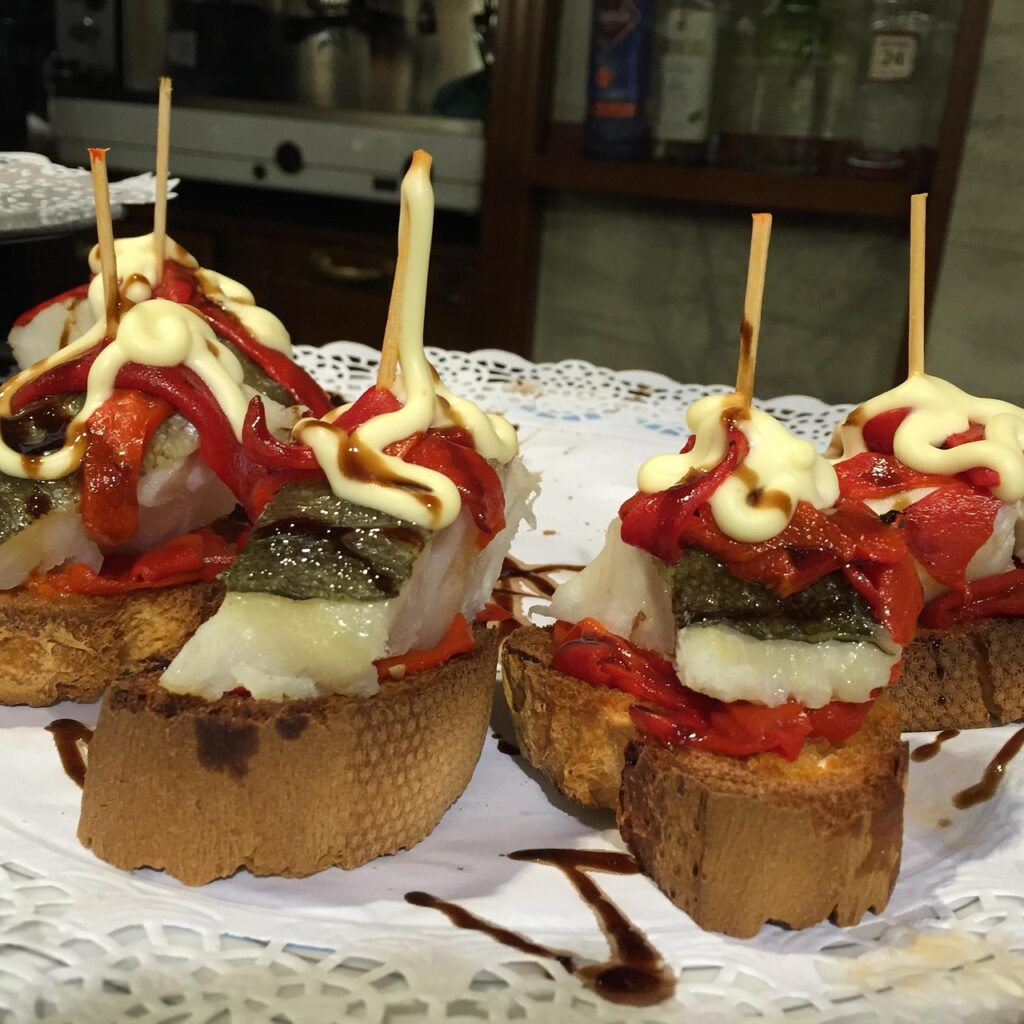
In the Basque Country and parts of the north the small plate is a pintxo, usually a slice of bread with a topping held together by a toothpick. You take what you want from the counter, keep the toothpicks, and the staff count them when you pay. Eat standing, move on after one or two, and dinner is done without sitting down.
What are the cheapest things to order in Spain?
Order what locals eat standing up: a bocadillo, a bar tapa, churros with chocolate, or a plate of patatas bravas. All of these are sold across the country, they are filling, and none of them needs a reservation.
- Bocadillo: a baguette-style roll filled with ham, cheese, tortilla de patatas or, in Madrid, fried squid (bocadillo de calamares). A good lunch for the park or the train.
- Patatas bravas: fried potato pieces with a spicy sauce, a standard bar order everywhere.
- Churros con chocolate: fried dough sticks with thick drinking chocolate, a breakfast or late-evening snack rather than a meal.
- Tostada con tomate: toasted bread with grated tomato and olive oil, the standard bar breakfast, usually ordered with a coffee.
For breakfast, skip the hotel buffet. A coffee and a tostada at a neighbourhood bar costs a small amount, and the counter is full of local office workers, which is a better sign than any review.
Bakeries and delicatessen counters sell bread, cheese, cured ham and olives by weight, enough for a picnic on a train or a park bench.
Find a hotel for your Spain trip
Flight plus hotel for the mainland coasts, searchable by date and budget.
Show Spain offersHow do you order a set lunch without surprises?
Read the board before you sit, then check what it includes: bread, a drink, dessert or coffee are not always part of the fixed price. The basics of the menú del día are in our guide linked above; this section covers how to avoid mistakes when you use it.
The board usually lists “primer plato” (first course) and “segundo plato” (second course) with three or four choices each. A menu is normally available on weekdays at lunchtime; at weekends it is often replaced by a more expensive version, or it does not exist. Ask “¿Qué incluye?” if the board does not say what is included.
Order from the menu, not from the carta (the regular list). A single dish from the carta can cost as much as the whole fixed menu. If a waiter hands you only the carta, ask “¿Hay menú del día?” before you decide.
Some restaurants add a small charge for bread or a table setting, called “pan” or “cubierto”. It should appear on the menu or the bill, and you can decline bread you did not ask for.
Which room type is cheapest in Spain?
For two people, a private room in a hostal or a hostel is often cheaper than a budget hotel, and a dormitory bed is the cheapest option for one. Smaller towns often have a hostal or pensión on the main street.
The names are easy to confuse:
- Hostel: dorm beds and often private rooms, shared kitchen and social areas. Good for solo travellers.
- Hostal: a small, usually family-run guesthouse with private rooms. Not a hostel despite the spelling.
- Pensión: similar to a hostal, usually simpler, sometimes with shared bathrooms.
- Albergue (pilgrim hostel): in Camino de Santiago towns an albergue is a basic hostel for walkers, and municipal ones usually require a pilgrim credential.
In many regions, the plaque by the door tells you the category: “H” for hotel, “HS” for hostal, “P” for pensión, with stars or a stripe for the grade. The lettering is not the same in every region, so check the listing rather than relying on the plaque alone.
Before you book a hostal, check whether the bathroom is private, whether there is air conditioning if you travel from late spring, and until what hour the reception is staffed.
Where in Spain are food and beds cheaper?
Outside Madrid, Barcelona, San Sebastián, Ibiza and the busiest Andalusian coast, both rooms and meals are noticeably cheaper. Inland Andalusia, Extremadura, Galicia, Castilla y León and the interior of Aragón and Valencia are the lower-cost parts of the country, and small cities there often have a hostal and a lunch board on every other street.
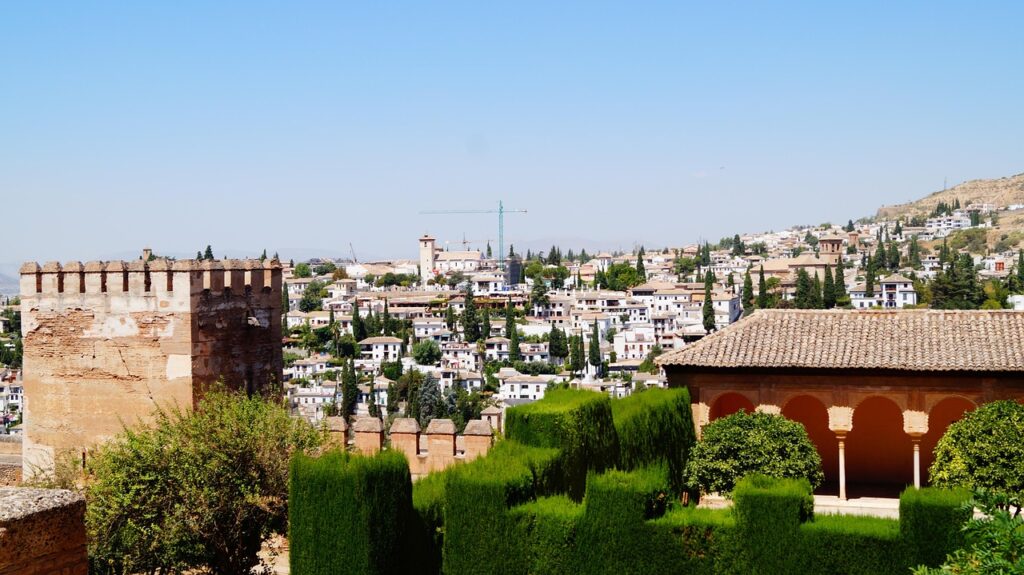
Cities differ more than regions. Madrid and Barcelona have the widest choice of cheap beds, but the highest rates for rooms in the centre, so staying one metro stop out is the standard move. Seville, Valencia and Granada tend to cost less for rooms but still charge more near the cathedral or the Alhambra.
The north coast is expensive for rooms in summer but known for good-value bar food, and the islands price by season, with the cheapest weeks outside school holidays.
Which extra costs appear on the bill?
The extras that matter most are the tourist tax, breakfast, parking and late check-in. They are small per night but add up over a week, and they are the reason the advertised price differs from the final one.
Catalonia charges a tourist tax per person per night, with the rate set by the type of accommodation, and it has been rising in steps. Barcelona adds a municipal surcharge on top of the Catalan tax. Check whether the price on the booking site includes them or whether they are added at the property.
Hotel breakfast is the second extra, and a bar across the street is cheaper. Parking in a city centre is the third: if you arrive by car, book a room with parking or leave the car at the edge of town.
Last, filter by “free cancellation” and book a few weeks ahead. A bed you can drop costs nothing, and you can rebook if a cheaper room appears.
FAQ
Is a hostal the same as a hostel in Spain?
No. A hostal is a small, often family-run guesthouse with private rooms, usually simpler and cheaper than a hotel. A hostel has dorm beds and shared areas. Both can be good value, so read the listing for the room type and bathroom.
Is it cheaper to eat in a restaurant or at a bar?
At the bar, as a rule. Bars price the same food lower than the same bar’s tables, and much lower than a terrace on a main square. A restaurant with a lunch board is the best sit-down option. Dinner at a restaurant is the most expensive way to eat.
Can vegetarians eat cheaply in Spain?
Yes, but you will need to ask. Tortilla de patatas, patatas bravas, salads, gazpacho, salmorejo, pisto and grilled vegetables are widely available. Many fixed lunches lean on meat and fish, so ask whether the cook can swap a course.
Why is there a charge for bread on my bill?
Some restaurants list a small “pan” or “cubierto” item per person. It is legal if shown on the menu, and you can ask the waiter to take away bread you did not want.
Pick your cities first, then choose a hostal or hostel near a metro or train stop and a bar or lunch board on the way. If you would like rooms and train tickets put together for a Spain trip, our travel booking service can arrange them.
Image credits: Pixabay / baklava; Pixabay / Nikolaiy
 Seychelles with Kids: Beaches, Reserves and Turtles
 A Week on a Yacht: Daily Life, Space, Seasickness and Cost
 Yacht Charter in Malta: What to Know Before You Book
 How to Behave at a Maltese Festa: A Visitor’s Guide