8 min read · Published: July 8, 2024 · Updated: October 29, 2026 · Prices and details checked: October 2026
Malta works on little money if you get three things right: fly outside July and August, use the bus instead of a hire car, and eat where the Maltese eat. The island is small and many of the best places cost nothing to enter. This guide goes through each line of the budget and ends with three sample days priced from official fares.
Key takeaways
- The cheapest months are March to May and October to November, and the sea is still warm enough to swim in October.
- A single bus journey costs 2.00 euros in winter and 2.50 euros in summer; the 7-day Explore card costs 25.00 euros.
- The Gozo ferry costs 4.65 euros for a round trip, paid only at Mġarr on the Gozo side.
- Valletta, Mdina, the Three Cities, Marsaxlokk, the Dingli Cliffs and every beach are free to visit.
- Budget for the eco contribution of 0.50 euros per adult per night, capped at 5.00 euros per stay, usually charged on arrival.
Table of contents
When is Malta cheapest?
From March to May and from October to mid November, when flights and accommodation cost noticeably less than in high summer and the island is quiet.
In July and August, apartment and hotel prices peak and the heat makes sightseeing hard work. The sea stays warm well into October, so late September and early October give you beach weather and low-season prices at once. Winter is cheaper still but wetter. Midweek flights with hand luggage only are the cheapest way in.
How much should you budget for accommodation?
Accommodation is the largest item and the one you can influence most. For couples and small groups, a holiday apartment is usually cheapest: you split the rent and cook some meals yourself. Hostels suit solo travellers, and Sliema, Gżira and Msida put you a short bus or ferry ride from Valletta at prices below the capital. Which area suits which budget is covered in our guide to where to stay in Malta on a budget.
One cost often missing from the booking price is the eco contribution: 0.50 euros per night for guests aged 18 and over, capped at 5.00 euros per person and stay, collected locally.
Combine your trip with a hotel in Malta
Flight plus hotel in Sliema, St. Julian's or Gozo for your dates and budget.
Show Malta offersHow do you get around Malta cheaply?
By public bus. The network reaches practically every town on Malta and Gozo. A single journey costs 2.00 euros in winter and 2.50 euros in summer, bought from the driver, and is valid for two hours with free changes; night routes cost 3.00 euros. Free travel applies only to holders of a personalised Tallinja Card, so visitors pay the normal fare.
For a week, compare two cards. The Explore Adult card costs 25.00 euros for seven days of unlimited day and night routes, sold only at sales offices. The 12 Single Day Journeys card costs 19.00 euros, can be shared and stays valid for six months, the better buy if you will ride fewer than a dozen times.
From the airport, the X1 to X4 express buses run to Valletta, Sliema, St Julian’s and the Gozo ferry at Ċirkewwa without a change. Two ferries save time: Sliema to Valletta runs every 30 minutes at 3.00 euros single or 5.00 euros return, and the Gozo Channel ferry from Ċirkewwa takes about 25 minutes and costs 4.65 euros for the round trip, paid at Mġarr on the way back. We advise against a hire car: driving is on the left and parking in Valletta, Sliema and Mdina is scarce.
What can you see in Malta for free?
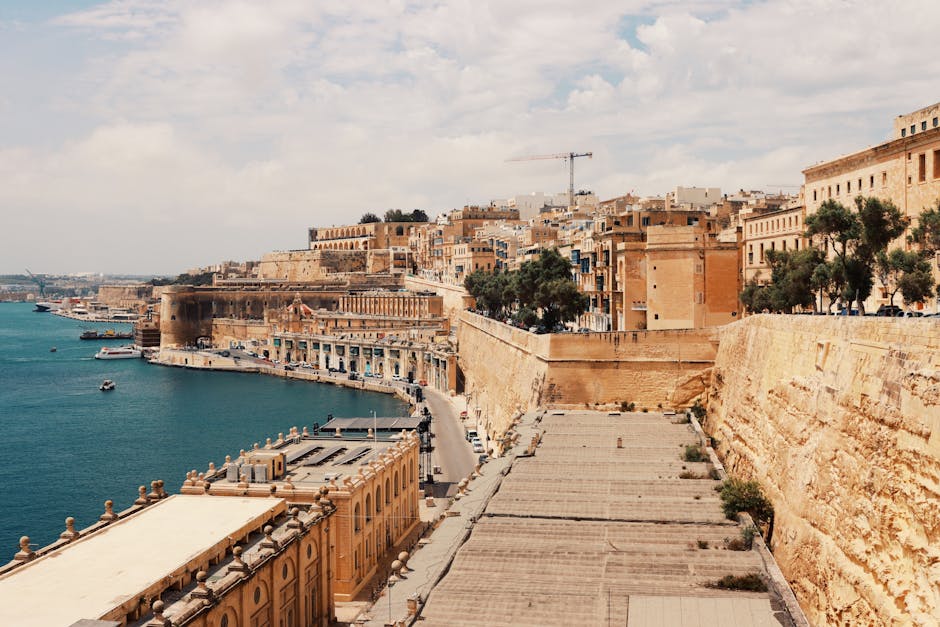
More than fits into a week. Valletta is a World Heritage Site and costs nothing to walk, as do Mdina, the Three Cities, Marsaxlokk, the Dingli Cliffs and every beach.
In Valletta, the Upper Barrakka Gardens give the best view across the Grand Harbour to the Three Cities, and the Saluting Battery fires daily below them. The Barrakka Lift takes you down to the Three Cities ferry for 1.00 euro return, free for children under 10 and for holders of a valid Three Cities ferry ticket.
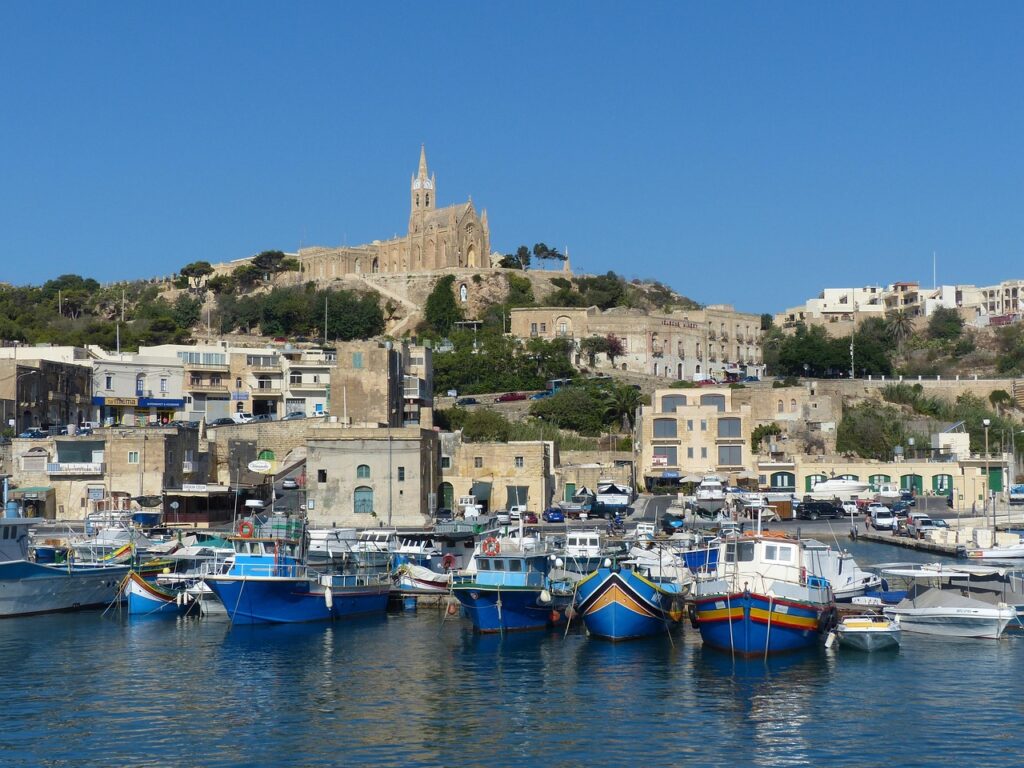
Mdina is quietest in the evening once the day trippers have gone. Marsaxlokk is known for its Sunday fish market, but the luzzu boats are moored there every day, when the quayside restaurants are cheaper. Golden Bay and Għajn Tuffieħa have sand, Mellieħa Bay is the shallowest beach for families, and in Sliema you swim off the rock ledges. The Blue Lagoon on Comino is reached only by boat, 15.00 euros return for adults and 7.00 euros for children under 10 with the local ferry co-op; go in May or October, not in high summer.
Which admissions are worth paying for?
Two places justify a fee even on a tight budget: St John’s Co-Cathedral in Valletta and the temples of Ħaġar Qim and Mnajdra.
St John’s costs 15.00 euros for adults and 12.00 euros for students and seniors; children under 12 enter free with an adult. It opens Monday to Saturday from 09:00 to 16:45 and is closed on Sundays. Inside are the gilded interior and two Caravaggios.
The combined ticket for Ħaġar Qim and Mnajdra costs 10.00 euros for adults and 5.50 euros for children aged 6 to 11; children up to 5 enter free. The temples stand on the cliffs above the sea.
The Ħal Saflieni Hypogeum admits no more than 10 people at a time, so Heritage Malta strongly recommends booking early. Adults pay 35.00 euros and a last-minute ticket on the day before costs 50.00 euros. Book as soon as your dates are fixed or skip it.
The Heritage Malta Multisite Pass costs 60.00 euros for adults for 30 days, but excludes the Hypogeum and St John’s. Since Tarxien Temples and St Paul’s Catacombs cost 6.00 euros each, it only pays off with a long list of sites.
How do you eat cheaply and still eat Maltese?
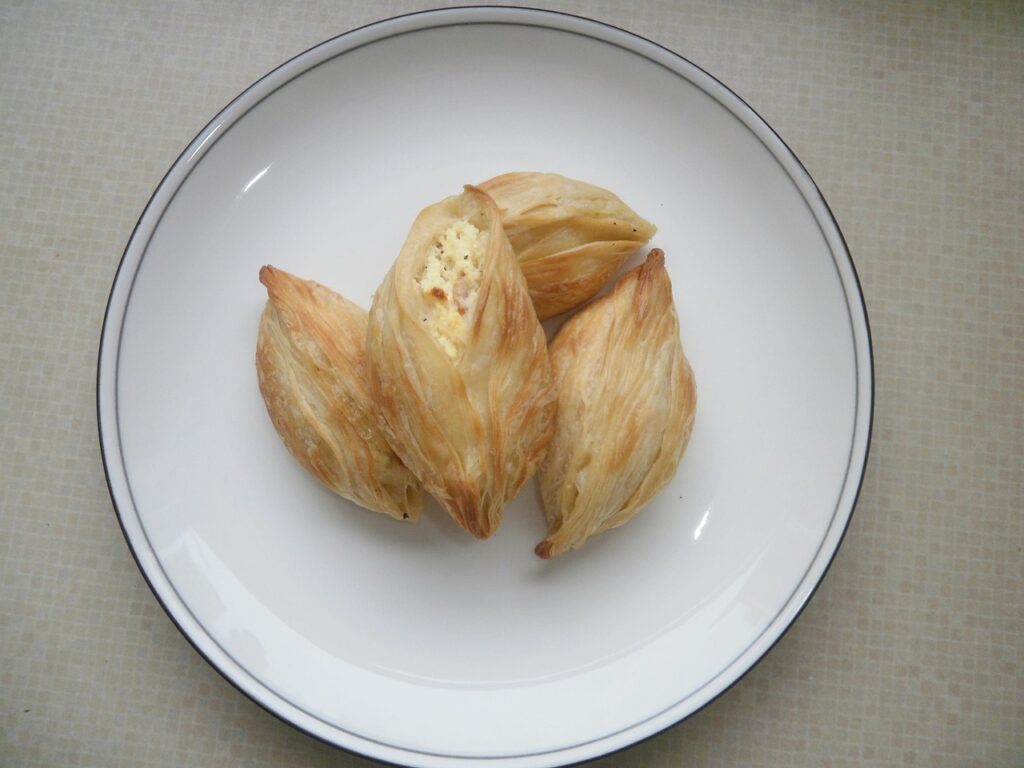
With pastizzi, ftira and lunch menus. Pastizzi are flaky pastries filled with ricotta or mushy peas, sold warm all day for a few coins, and two make a lunch. Ftira is the round Maltese bread filled with tomatoes, tuna, olives and capers, sold in bakeries for a fraction of a restaurant meal.
In the evening, avoid the front row of the Sliema promenade and Republic Street in Valletta. Two streets back, or in villages such as Rabat or Żejtun, you get rabbit (fenek) or fresh fish at local prices, often as a cheaper set menu at lunchtime. Dishes and places are covered in our article on Malta as a culinary destination. Tap water is safe but tastes of chlorine; a multipack from the supermarket costs less than one bottle from a kiosk.
What do three sample days cost?
Three days priced with winter single bus fares and official admissions, excluding food and accommodation.
Day 1, Valletta and the Three Cities. Bus from Sliema to Valletta and back (2 x 2.00 euros), St John’s Co-Cathedral (15.00 euros), Upper Barrakka Gardens (free), Barrakka Lift (1.00 euro) down to the Three Cities ferry, Birgu on foot (free). Fixed costs: 20.00 euros plus the harbour ferry.
Day 2, Mdina, Rabat and the Dingli Cliffs. Bus from Valletta to Mdina (2.00 euros), Mdina and Rabat on foot (free), St Paul’s Catacombs (6.00 euros), bus to Dingli and back to Valletta (2 x 2.00 euros). Fixed costs: 12.00 euros.
Day 3, Gozo. Bus to Ċirkewwa and back (2 x 2.00 euros), Gozo Channel ferry (4.65 euros), two bus journeys on Gozo (2 x 2.00 euros), Ġgantija Temples with Ta’ Kola Windmill (10.00 euros), Ramla Bay and the Cittadella (free). Fixed costs: 22.65 euros.
Across the three days, transport and admissions come to about 55 euros per adult. Accommodation and evening meals decide the budget, not the sights.
FAQ
How much money do I need per day in Malta?
That depends almost entirely on where you sleep and how often you eat out; transport and admissions are modest, as the sample days show. A shared apartment, pastizzi at lunch and a simple dinner keep costs low in the off season.
Is the 7-day Explore card worth it?
Only if you ride more than twelve times in a week. At 25.00 euros against a winter single fare of 2.00 euros you need thirteen journeys to break even. For a slower trip, the 12 Single Day Journeys card at 19.00 euros is cheaper and can be shared.
Is Malta cheap to visit with children?
Yes. Children under 4 ride the bus free and the Explore Child card for ages 4 to 10 costs 7.00 euros for seven days. Heritage Malta sites are free up to age 5, St John’s is free under 12, and the Gozo ferry costs 1.15 euros for ages 3 to 12. An apartment with a kitchen saves families the most.
Which costs do budget travellers overlook most often?
The eco contribution per night, luggage fees on low-cost airlines, a taxi from the airport instead of the X buses, the boat to Comino, and the 50.00 euro penalty for riding without a valid bus ticket.
Next, fix your dates, ideally April to May or late September to October, and book flights and accommodation a few weeks ahead. For two or more people, price an apartment against hostel beds. Travelissimo lets its own holiday apartments in Sliema and St Julian’s, both a few minutes from Valletta by bus or ferry.
Image credits: Pexels; Pixabay / pixabairis; Pixabay / Maltese-Foods
 Seychelles with Kids: Beaches, Reserves and Turtles
 A Week on a Yacht: Daily Life, Space, Seasickness and Cost
 Things to Do in Pretoria: A Day Trip Plan from Johannesburg
 Sicilian Cuisine: What to Eat, Drink and Order in Sicily