8 min read · Published: May 19, 2024 · Updated: October 29, 2026 · Prices and details checked: October 2026
The cheapest place to stay in Malta depends less on the type of room and more on the town you choose. Sliema and St. Julian’s sit at the top of the price scale, Gzira and Msida next door cost noticeably less for almost the same location, Bugibba and Qawra in the north are the classic budget resort, and Marsaskala and Gozo are the quiet, low-price options for travellers who accept longer journeys. This guide compares six areas by character, price level relative to each other and how well the bus gets you around.
Key takeaways
- Gzira and Msida are the best value in central Malta: a short walk from the Sliema ferry and bus terminus, with lower prices and the same connections.
- Bugibba and Qawra on St. Paul’s Bay have the largest stock of budget hotels and apartments on the island; expect a resort feel and longer bus rides to Valletta.
- Marsaskala in the south east is a residential seaside town with low prices, a fishing harbour and fewer direct bus routes.
- Gozo has the lowest price level overall, reached by the Gozo Channel ferry in about 25 minutes from Cirkewwa (4.65 euros return for foot passengers).
- A single bus ticket costs 2.00 euros in winter and 2.50 euros in summer and is valid for two hours with free changes, so a cheaper area outside the centre rarely costs you much in transport.
Table of contents
Which Malta area is cheapest to stay in?
Gozo is the cheapest, followed by Marsaskala, then Bugibba and Qawra, then Msida and Gzira, with Sliema and St. Julian’s the most expensive. The gap between Sliema and Gzira is the one most visitors overlook: the two towns share a seafront, and the price difference comes from name recognition more than from distance.
Price levels move with the season everywhere, so the order above describes how the areas compare to each other, not fixed amounts. In high summer even Bugibba fills up and gets pricier; in winter the difference between a Sliema apartment and a Gzira apartment shrinks. Transport rarely cancels out the saving: a bus ticket costs 2.00 euros in winter and 2.50 euros in summer, and the adult Explore card covers seven days of day and night routes for 25.00 euros. Wherever you stay, add the Eco Contribution to your budget: 0.50 euros per person and night for guests aged 18 and over, capped at 5.00 euros per stay.
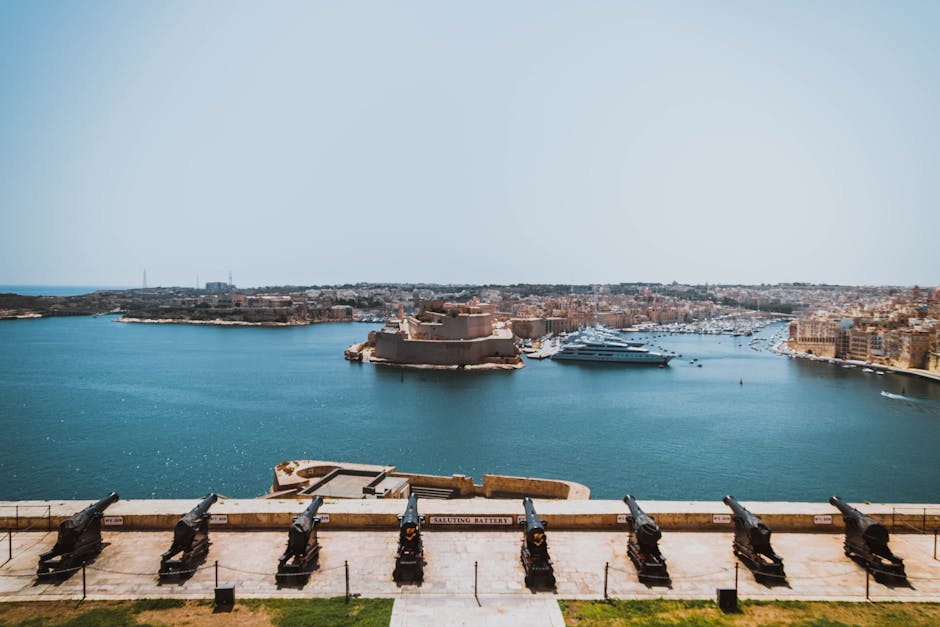
Is Sliema worth the higher price?
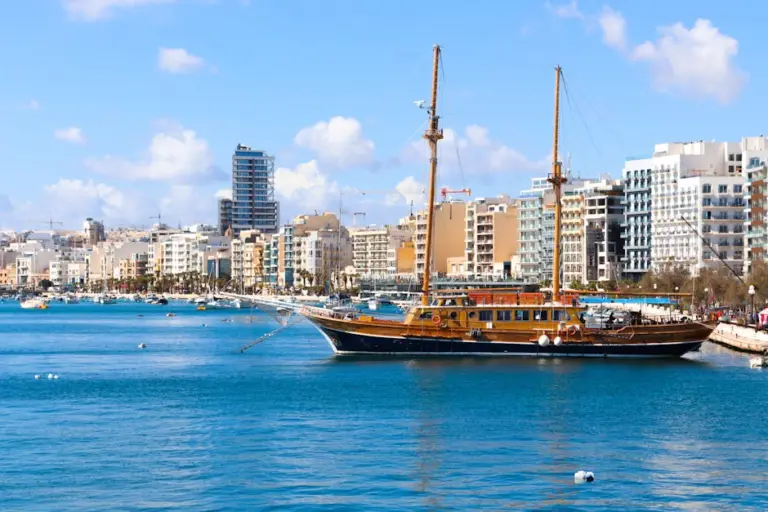
Sliema is worth it if you want the shortest journeys to everything and are willing to pay for that convenience. It is the island’s main shopping and seafront town, with the Valletta ferry leaving every 30 minutes from the Strand (3.00 euros single, 5.00 euros return for adults) and buses in every direction from the Ferries terminus.
What you get for the premium: a promenade for evening walks, rocky swimming spots along the Tigné and Qui-si-Sana coast, shops and pharmacies within a few minutes on foot, and no need for a car at any point. What you give up: it is busy, parts of it are under constant construction, and the cheapest rooms are often in older blocks without a sea view.
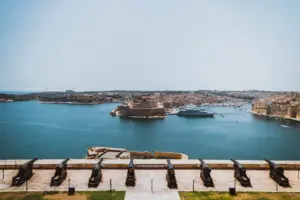
Combine your trip with a hotel in Malta
Flight plus hotel in Sliema, St. Julian's or Gozo for your dates and budget.
Show Malta offersWhy are Gzira and Msida the smart budget choice for central Malta?
Gzira and Msida give you the Sliema location at a lower price because they lie directly behind it on the same bay, within walking distance of the Sliema ferry and bus terminus. Gzira runs along Marsamxett harbour opposite Valletta; Msida sits at the inner end of the creek, with the yacht marina and the university nearby.
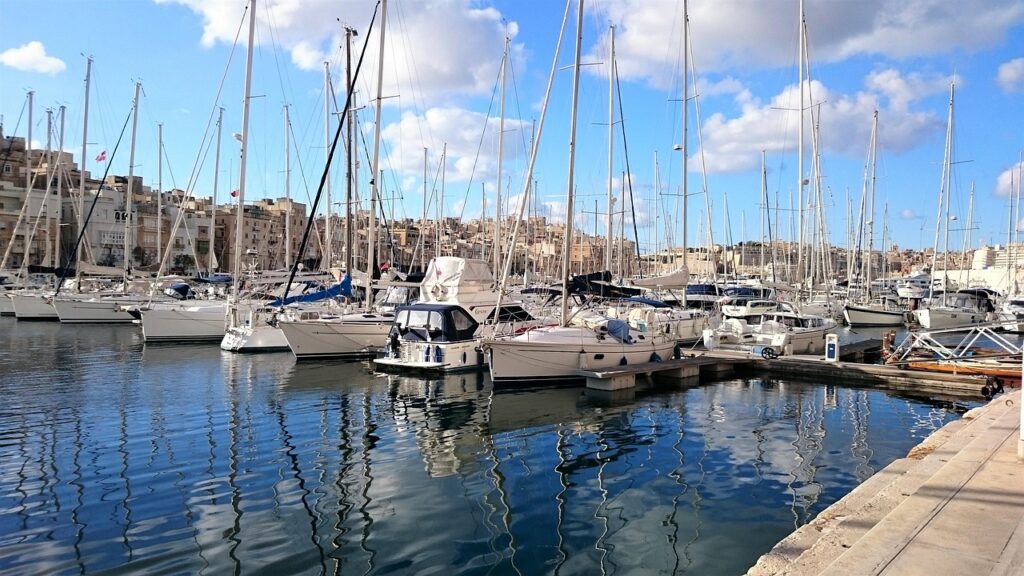
Gzira mixes older Maltese townhouses converted into guesthouses with newer apartment blocks. Manoel Island and the seafront gardens are on your doorstep, and the walk along the water to the Sliema ferry follows the harbour the whole way. Msida is more residential and student-oriented, which keeps prices down and means plenty of cheap cafés, bakeries and small grocers. The trade-off in both towns is traffic: the road along the creek is one of the busiest on the island, so ask for a room facing away from it.
Bus links are a strong point. Most routes between Valletta and the northern resorts pass through Msida and Gzira, so you often have more buses to choose from than in Sliema itself.
Who should stay in Bugibba and Qawra?
Bugibba and Qawra suit travellers who want a cheap base with a holiday atmosphere, several beaches within reach and no ambition to be in Valletta every evening. The two towns form one resort on the St. Paul’s Bay peninsula in the north, built up with hotels, self-catering apartments, pubs and restaurants aimed at package tourists.
The appeal is the sheer number of beds, which keeps prices competitive outside the peak weeks, plus easy access to the north of the island: Mellieħa Bay and Golden Bay for sandy beaches, Cirkewwa for the Gozo and Comino ferries, and the Malta National Aquarium right in Qawra. The promenade loops around the peninsula, though swimming here is from rocks and small lidos rather than sand.
The drawback is distance. Valletta is a longer bus ride from here than from anywhere on the Sliema side, and summer buses can be full by the time they reach your stop. The passenger fast ferry also calls at Bugibba, with the crossing to Mgarr on Gozo taking about 30 minutes, so Bugibba works well as a base for a Gozo day trip.
Is Marsaskala a good budget base in the south east?
Marsaskala is a good base if you value quiet evenings, a local feel and low prices over fast access to the sights. It is a residential town on a long inlet in the south east, with a small fishing harbour, a promenade lined with family restaurants, and St. Thomas Bay a short walk south for swimming.
Prices are lower than on the Sliema side because most visitors never consider the south east at all. Your neighbours are Maltese families rather than other tourists, and the restaurants along the bay are where locals come for fish at the weekend. Marsaxlokk and the Three Cities are the nearest attractions.
The limitation is connections. Marsaskala has direct buses to Valletta, but reaching Sliema, St. Julian’s or the northern beaches means changing in the capital, which adds time to every trip. For a slow week with a few day trips this hardly matters. If you want nightlife or several beaches in one day, choose an area further north.
When is Gozo the better choice for a cheap stay?
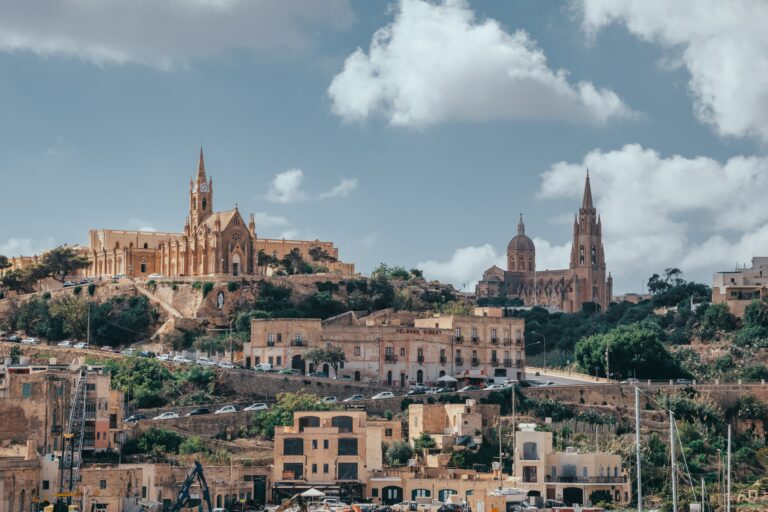
Gozo is the better choice when you can spend at least three or four nights there and are happy to treat Malta’s main island as the day trip rather than the other way round. Accommodation on Gozo, from converted farmhouses in villages like Għarb and Xagħra to apartments in Marsalforn and Xlendi, is generally the lowest-priced on the islands.
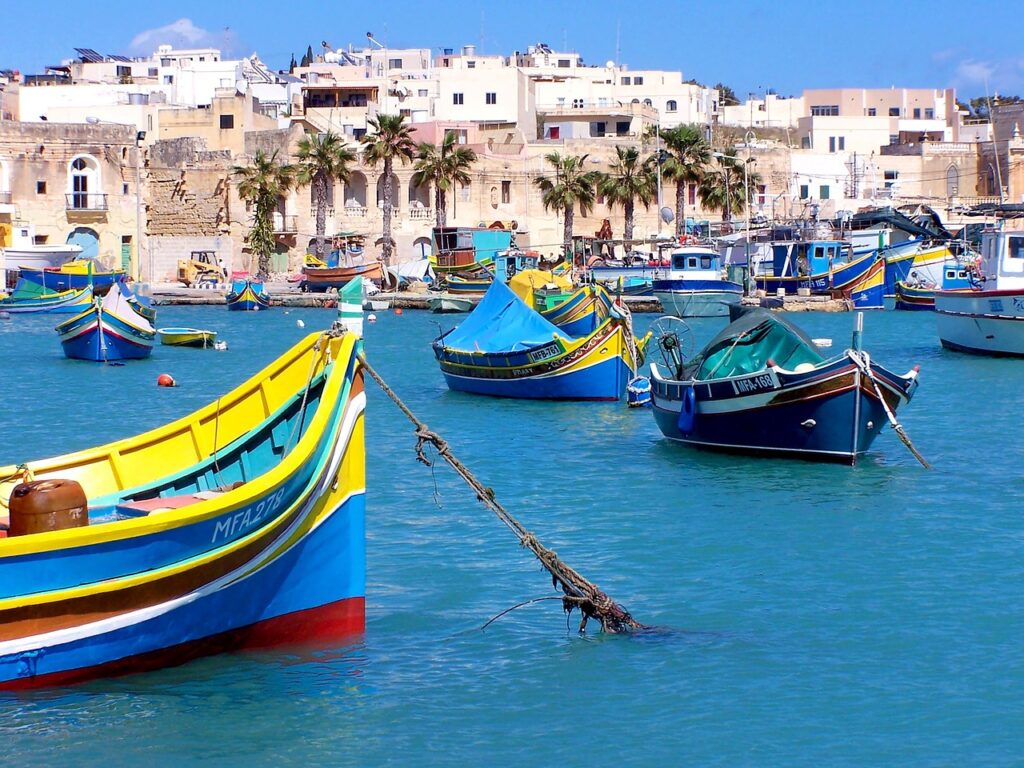
The ferry makes commuting between the islands impractical as a daily routine but easy as an occasional trip. Gozo Channel sails between Cirkewwa and Mgarr in about 25 minutes, and a foot passenger pays 4.65 euros for the round trip, paid only on the Gozo side. From Mgarr, the passenger-only fast ferry reaches Valletta in about 45 minutes, a comfortable way to spend one day in the capital.
Life on Gozo is slower and more rural: Victoria with the Cittadella is the only real town, villages close down early, and buses radiate from Victoria with less frequent service than on Malta. For an overview of the island, see our Gozo guide.
FAQ
Is it cheaper to stay in Malta or Gozo?
Gozo is cheaper overall, both for accommodation and for eating out. The saving is real for stays of several nights, but a single night on Gozo as part of a short Malta trip rarely pays off once you add the ferry crossing and the time spent travelling to Cirkewwa.
Is Bugibba a good place to stay on a budget?
Yes, Bugibba is the island’s largest budget resort and prices are among the lowest on the main island outside the peak weeks. It suits beach-focused trips and Gozo day trips. If you want to spend most evenings in Valletta or Sliema, the daily bus ride becomes tiring.
Should I stay in Sliema or St. Julian’s on a budget?
Neither is a budget area, and St. Julian’s, with Paceville and Portomaso, tends to be the more expensive of the two. If you want to be close to them, stay in Gzira or Msida and walk or take a short bus ride; you keep the location and save on the room.
Can I get around Malta without a car if I stay in a cheaper area?
Yes. All six areas in this guide have bus connections to Valletta, and Gzira, Msida and Bugibba have frequent services. Marsaskala and Gozo need more patience and some planning around timetables, but a car is a convenience there, not a necessity.
Which area is best for a first visit on a budget?
Gzira or Msida. You get the central location, the Sliema ferry to Valletta and the widest choice of buses, at a lower price than Sliema. Bugibba is the alternative if beaches matter more to you than the capital.
Decide on the area first, then on the room. If Gzira or Msida is your pick, compare it with our own holiday apartments in Sliema and St. Julian’s to see what the difference actually buys you. For when and how to book at the lowest price, read our guide to finding cheap accommodation in Malta.
Image credits: Pexels; Pixabay / neringy; Pixabay / JonHoefer
 Seychelles with Kids: Beaches, Reserves and Turtles
 A Week on a Yacht: Daily Life, Space, Seasickness and Cost
 Things to Do in Pretoria: A Day Trip Plan from Johannesburg
 Sicilian Cuisine: What to Eat, Drink and Order in Sicily