8 min read · Published: May 20, 2024 · Updated: October 29, 2026 · Prices and details checked: October 2026
The cheapest way to stay in Malta is to travel outside July and August, book a self-catering apartment or guesthouse several months ahead, and ask the owner for a direct price before you confirm on a portal. Timing matters more than location: the same apartment in Sliema can cost a multiple of its winter rate in high summer. This guide covers the season curve, lead times, direct booking versus platforms, long-stay discounts and the fine print.
Key takeaways
- Rates follow the calendar: July and August are the most expensive months, November to March the cheapest, with short spikes at Christmas, New Year and Easter.
- For summer, book apartments and guesthouses early in the year; for winter, you can book a few weeks ahead and still choose freely.
- Compare the portal price with the owner’s direct price. Direct bookings often remove the platform commission or add nights, breakfast or a late checkout.
- Stays of a week or more, and especially a month or more, usually unlock lower nightly rates, above all in autumn and winter.
- Read the fine print: the Eco Contribution is 0.50 euro per adult per night (capped at 5 euro per person per stay) and is often paid on arrival; deposits and cleaning fees can be hidden until the last booking step.
Table of contents
When is accommodation in Malta cheapest?
Accommodation in Malta is cheapest from November to March, excluding the Christmas and New Year holidays, and most expensive in July and August. The curve in between is predictable, which makes it easy to plan around.
Think of the year in three bands. High season is July and August, when schools across Europe are closed and the islands are full. Shoulder season is May, June, September and October: the sea is warm enough to swim, prices are noticeably lower than in midsummer, and most places still have availability if you book a few months out. Low season runs from November to March, apart from the festive period around Christmas and New Year. Easter and the Carnival weekend before Ash Wednesday also push prices up for a few days.
For swimming at a fair price, September and early October offer the best balance. For walking, history and food, January and February are the cheapest months of all and the islands are at their quietest.
How far ahead should you book?
For a summer stay, book as early as you can, ideally in winter or early spring; for a low season stay, a few weeks of lead time is usually enough. The reason is simple supply: Malta is small, the stock of good apartments and guesthouses is limited, and the cheapest units sell out first.
In high season, waiting rarely pays. Affordable apartments are booked months ahead by returning guests and language school students, and what remains in June is the expensive end of the market. Last-minute bargains do exist, but mostly in large hotels with unsold rooms, not in the small properties that are cheap to begin with.
In low season the picture reverses. Many owners lower prices gradually when their calendar stays empty, so booking a few weeks before travel often beats booking half a year ahead. Set a price alert for your dates and compare again shortly before you commit.


Combine your trip with a hotel in Malta
Flight plus hotel in Sliema, St. Julian's or Gozo for your dates and budget.
Show Malta offersShould you book direct or through a portal?
Use portals to find and compare, then ask the owner or agency for a direct quote before you confirm. Platforms charge the host a commission on every booking, and many Maltese owners will pass part of that saving on if you contact them directly.
The routine is simple. Shortlist two or three properties on a platform, read the recent reviews, and note the total price including all fees. Then search for the property name or the operator: most established apartment operators have their own website or at least an email address. Ask for the same dates and say what the portal is charging. A direct booking often comes with a lower price, a free extra night on longer stays, or more flexible check-in times.
Two conditions apply. Pay in a traceable way (bank transfer against a written confirmation, or card payment on the operator’s own site), never cash in advance to an unknown person. And ask for the property’s Malta Tourism Authority licence number; a host who cannot provide one is a reason to stay with the portal booking and its cancellation protection. Portals also remain the better choice when free cancellation matters more to you than the last few euro.
How much can a longer stay save?
A stay of a week or more almost always costs less per night than a weekend, and stays of a month or more are priced on a different scale altogether. Owners prefer fewer changeovers, and in autumn and winter many would rather have one guest for four weeks at a low rate than an empty flat.
Weekly discounts are built into most portal listings and appear when you extend the dates. Monthly discounts are often larger but not always shown, so ask directly. This is also where owners are most open to negotiation, especially for several months in low season. Winter visitors who arrive in November and leave in March frequently pay a fraction of the summer price for the same apartment.
Before committing to a long stay, ask whether utilities are included or metered, because air conditioning in summer and electric heating in winter can add a meaningful amount to a monthly rental, and clarify how often cleaning is included.
What should you check in the fine print?
Before you pay, check four items: the Eco Contribution, the security deposit, the cleaning fee and the cancellation terms. These are where a cheap headline rate quietly becomes an average one.
The Eco Contribution is a Maltese environmental levy on tourist accommodation. It amounts to 0.50 euro per guest per night for guests aged 18 and over, capped at 5 euro per person for a continuous stay. It is often not included in the portal price and is collected on arrival, frequently in cash.
Security deposits vary widely. Hotels block an amount on your card; apartment owners may ask for a cash or transfer deposit returned after checkout. Agree the amount and refund method in writing beforehand. Cleaning fees should be visible in the price breakdown; if the total jumps at the final step, the fee is the reason, and it weighs most on short stays. Finally, read the cancellation terms rather than relying on the “free cancellation” label, because the free period often ends well before arrival.
Which type of accommodation gives the lowest price per night?
Self-catering apartments and guesthouses are the cheapest option for two or more people; hostel dorms are cheapest for solo travellers; budget hotels sit in between. Apartments win for couples and families because the rate is per unit, not per person, and cooking a few meals yourself cuts the daily budget further.
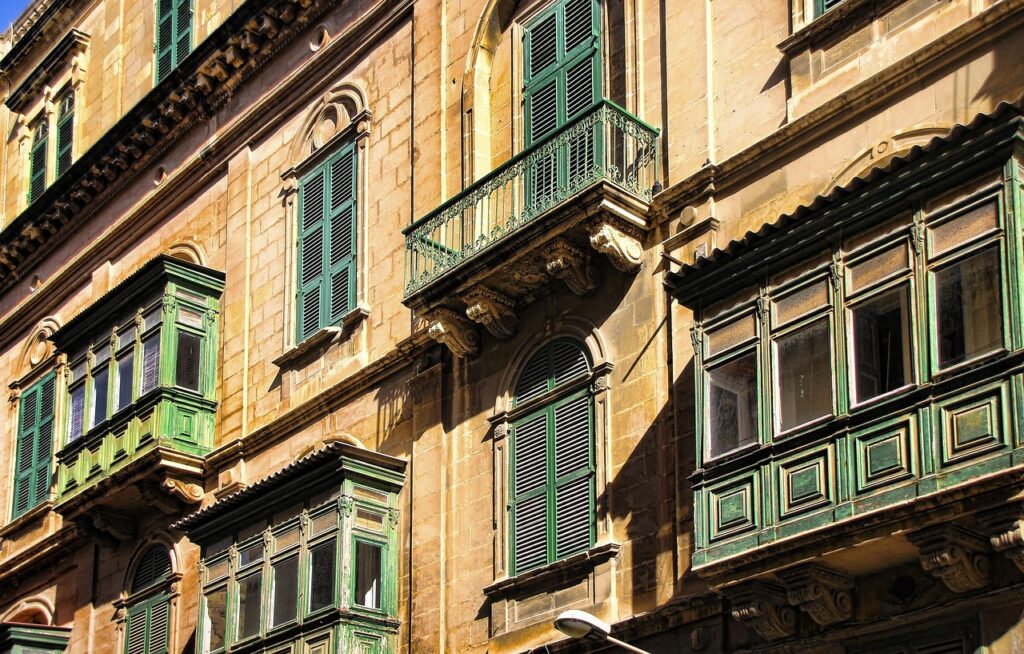
A guesthouse is a good compromise if you want someone on site and breakfast included. Once you are two people, a private double in a hostel is often no cheaper than a small apartment. Which towns suit which budget is covered in our guide to where to stay in Malta on a budget; what to check inside a rental is in affordable vacation rentals in Malta.
FAQ
Is it cheaper to book Malta accommodation last minute?
Only in low season, and mainly for hotels with empty rooms. In July and August last-minute availability is scarce and expensive, and the small apartments and guesthouses with the best value are long gone. If your dates are flexible between November and March, waiting a few weeks can pay off.
Do I have to pay the Eco Contribution on top of the room price?
Usually yes. Most hosts collect the 0.50 euro per adult per night separately on arrival, and guests under 18 on the day of arrival do not pay it. Ask when you book whether it is already included.
Can I negotiate the price with an apartment owner in Malta?
Yes, within reason, and most readily for direct bookings, longer stays and low season dates. A polite email naming the dates, the length of stay and the price you have seen elsewhere is enough. Do not expect movement on peak summer weeks.
Are prices on booking portals the same as booking direct?
Not always. Many hosts list the same rate everywhere, but the portal keeps a commission, so a direct booking often brings a small discount or extras such as a late checkout. Compare the total price including cleaning fee and deposit terms, not the nightly rate alone.
How do I know a cheap listing is legitimate?
Check for a Malta Tourism Authority licence number, recent reviews that mention specifics, and a traceable payment route. Be cautious with listings that ask for full payment to a private account before any written confirmation, or with prices far below everything comparable for the same dates.
Decide your month first, then your lead time, then the booking route, and the price largely takes care of itself. If you are looking at Sliema or St Julian’s, our own holiday apartments in Malta can be booked directly with us, with the Eco Contribution and deposit terms stated up front.
Image credits: Pexels; Pixabay / sonatuks; Pixabay / GregMontani
 Seychelles with Kids: Beaches, Reserves and Turtles
 A Week on a Yacht: Daily Life, Space, Seasickness and Cost
 Things to Do in Pretoria: A Day Trip Plan from Johannesburg
 Sicilian Cuisine: What to Eat, Drink and Order in Sicily