7 min read · Published: August 29, 2023 · Updated: October 29, 2026 · Prices and details checked: October 2026
Sicily’s essential sights fall into three groups: Greek and Roman ruins in the south and east, the Arab-Norman monuments of Palermo, and the volcano that dominates the east coast. Below are ten of them, with the reason each one earns its place, how much time to plan and when to go.
Key takeaways
- The Valley of the Temples in Agrigento is the island’s best ancient site. Entry is 14 EUR (7 EUR reduced), and late afternoon is the best time.
- The Greek Theatre in Taormina costs 14 EUR and frames Etna behind the stage. Arrive at opening to avoid the day-trip crowds.
- Etna can be seen from a cable car up to 2,500 m (54 EUR return) without any hiking.
- Palermo holds three major monuments: the Norman Palace with the Palatine Chapel, the cathedral and, nearby, Monreale.
- Villa Romana del Casale (14 EUR) lies inland and needs a dedicated day, but its mosaics justify it.

Table of contents
- 1. Why is the Valley of the Temples the first stop in Sicily?
- 2. What makes the Greek Theatre in Taormina worth the crowds?
- 3. How do you see Etna without a full expedition?
- 4. What should you see in Syracuse?
- 5. Is Ortigia a sight or just a nice place to walk?
- 6. Why visit the Norman Palace and Palatine Chapel in Palermo?
- 7. What is special about Palermo Cathedral?
- 8. Is Monreale worth the trip from Palermo?
- 9. What should you do in Catania?
- 10. Why is Villa Romana del Casale worth a full day?
- Bonus: Should the Aeolian Islands be on the list?
- FAQ
1. Why is the Valley of the Temples the first stop in Sicily?
The Valley of the Temples near Agrigento is the best-preserved group of Greek temples outside Greece, and a UNESCO World Heritage Site. The Temple of Concordia, built in the 5th century BC, is the highlight, with its Doric columns and roof structure largely intact.
Plan half a day, more if you want to walk the whole ridge. The archaeological area costs 14 EUR, or 7 EUR reduced. Go late in the afternoon when the stone turns golden and the heat eases. Midday in July and August is exposed and shadeless, so carry water and a hat.
2. What makes the Greek Theatre in Taormina worth the crowds?
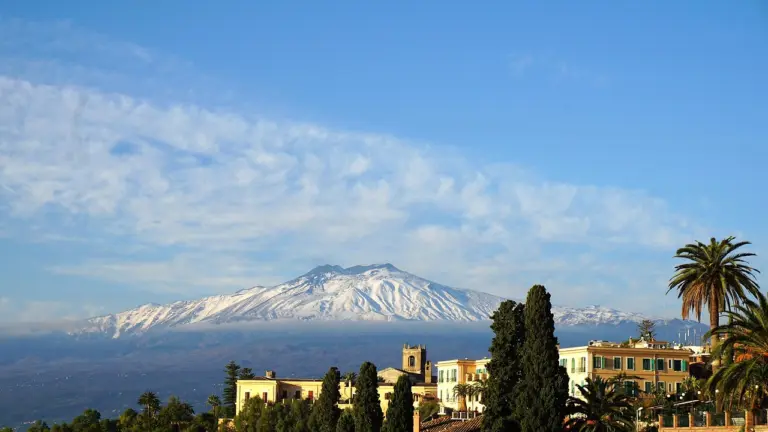
The ancient theatre in Taormina is worth it for one reason: the stage opens onto the sea and Etna at the same time. It is Greek in origin, was rebuilt by the Romans and is still used for performances.
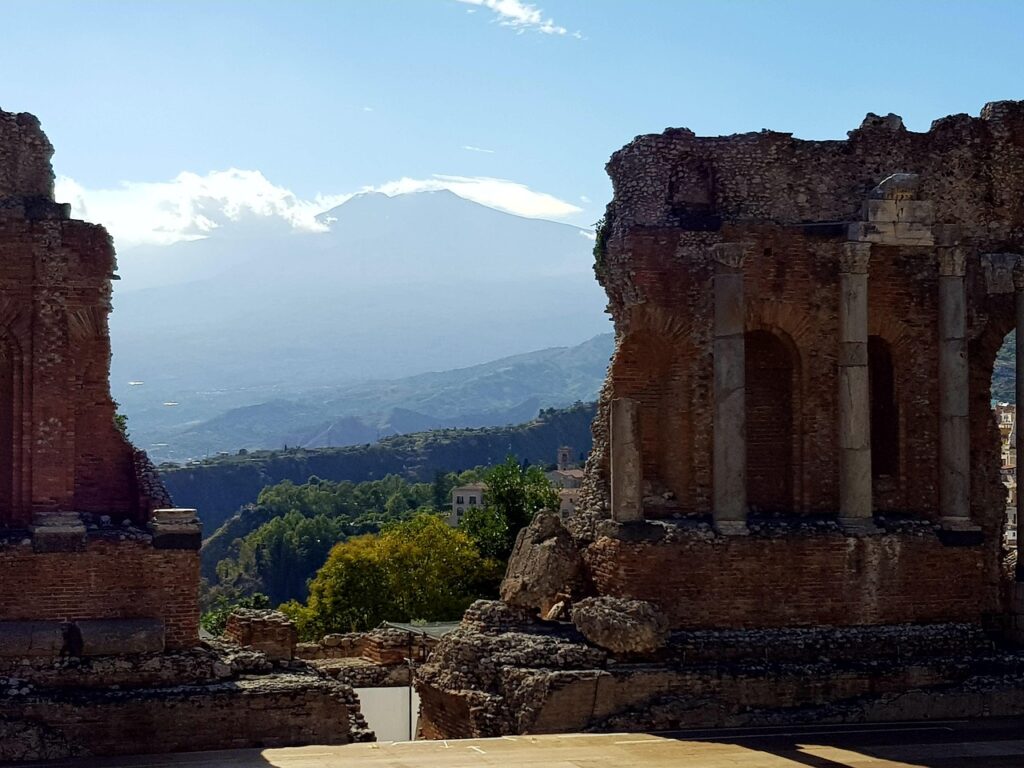
Allow one to two hours. Entry is 14 EUR, or 7 EUR reduced, and the site is open daily from 9:00 to 19:45, with last entry at 19:00. The town fills up from late morning when tour groups arrive, so the first slot after opening is the quietest.

Combine these places with a beach stay in Sicily
Packages with flight and hotel for Taormina, Cefalù or the south coast.
Show Sicily offers3. How do you see Etna without a full expedition?
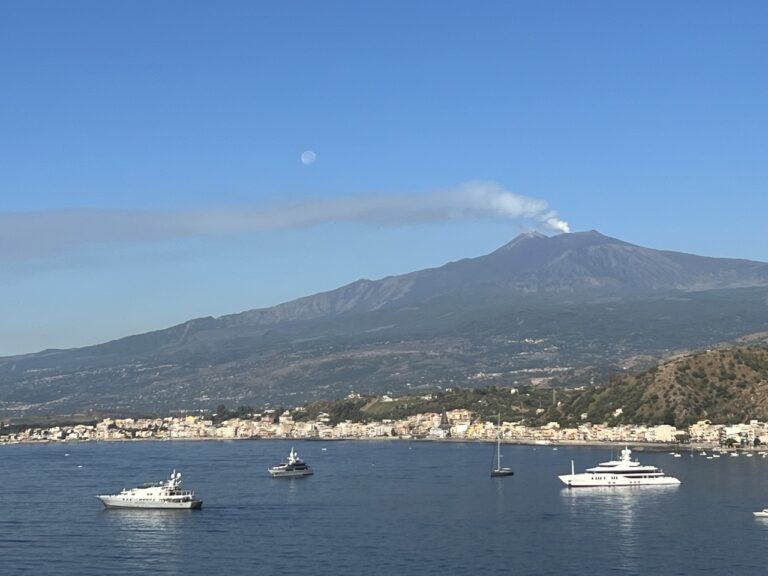
Etna is the island’s defining landmark, and you can experience it without technical climbing. The Funivia dell’Etna cable car takes you to 2,500 m for 54 EUR return, fast track included, and from there you can walk across black lava fields.
Block a half day. For higher ground, the Tour 3000 combines cable car, a 4×4 bus and a guide up to 3,000 m for 82 EUR for adults, with an open ticket valid from 8:30 to 15:15. Clear mornings give the best views, and conditions at altitude differ sharply from the coast, so bring a warm layer even in summer. Treks and guided summit tours are covered in our activities guide.

4. What should you see in Syracuse?
Syracuse was one of the most powerful cities of the ancient Greek world, and the Neapolis Archaeological Park keeps its Greek Theatre, cut directly into the rock of the hillside. Syracuse and the necropolis of Pantalica are together a UNESCO World Heritage Site.
Plan two to three hours for the park and visit in the morning, because there is little shade. Add the city’s archaeological museum if you want the finds explained.
5. Is Ortigia a sight or just a nice place to walk?
Ortigia is both: the old centre of Syracuse sits on a small island, and the whole district is the attraction. Narrow lanes lead to the Piazza del Duomo, where the cathedral incorporates the columns of an ancient Greek temple into its walls, and to the Fountain of Arethusa, a freshwater spring right beside the sea.
Allow half a day on foot. Evening is best, when the Baroque facades light up and the lanes cool down. The island is small enough that you need no transport.
6. Why visit the Norman Palace and Palatine Chapel in Palermo?
The Palatine Chapel inside the Norman Palace is the best single room for understanding Sicily’s mixed heritage: Byzantine mosaics, an Arab-style wooden ceiling and Norman architecture in one space. Palermo’s Arab-Norman monuments are listed by UNESCO as a group.
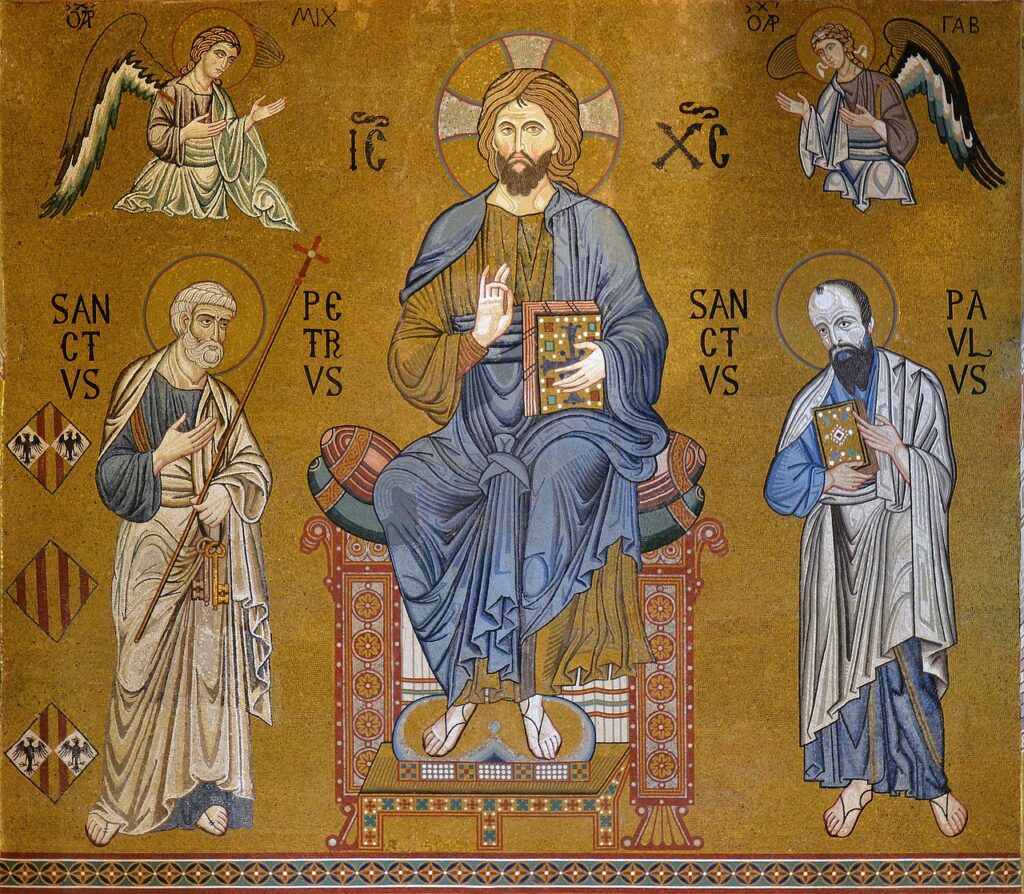
Plan about two hours. The palace is open Monday to Saturday from 8:30 with last entry at 16:30, and on Sundays and public holidays from 8:30 with last entry at 12:30. Go early, since the chapel is small and queues build later in the morning.
7. What is special about Palermo Cathedral?
Palermo Cathedral is a layered building: Norman origins in the 12th century, with Gothic, Baroque and neoclassical additions, so the exterior reads as a short history of the island. Inside, the royal tombs are the main point of interest.
Allow an hour. Opening times and paid areas such as the roof change with restoration work, so check the cathedral’s own website before you go. For markets and old districts, see our Palermo guide.
8. Is Monreale worth the trip from Palermo?
Yes: the cathedral in Monreale covers its interior walls in Byzantine-style gold mosaics, and it is among the finest in Sicily. It sits on a hill above Palermo and works as a half-day trip.
The cloister of Santa Maria Nuova next door costs 8 EUR, or 4 EUR reduced, and has carved capitals from the Norman period. Go in the morning, when daylight shows the mosaics at their best.
9. What should you do in Catania?
Catania is the practical base for Etna and the east coast, and a sight in its own right. The city was rebuilt after the 1693 earthquake, and much of the centre is built in dark lava stone, which gives it a different look from other Baroque towns.
Plan half a day. Start at the Piazza del Duomo with the elephant fountain and the cathedral of Sant’Agata, then walk up Via Etnea, the main avenue, towards the volcano. Early morning and late afternoon are the most comfortable times.
10. Why is Villa Romana del Casale worth a full day?
The villa near Piazza Armerina holds some of the best-preserved Roman floor mosaics anywhere, and it is a UNESCO World Heritage Site. The floors show hunting scenes, animals and daily life across many rooms.
Entry is 14 EUR. Plan two hours on site and expect a long drive from the coast, because the villa lies in the interior. We recommend a car or a guided day trip, and spring or autumn, when the interior is cooler.
Bonus: Should the Aeolian Islands be on the list?
Yes, if you have extra days. The Aeolian Islands are a UNESCO World Heritage Site reached by boat from the northeast coast, with Stromboli’s active volcano and Lipari’s old town as the main draws. Check ferry schedules with the operator before you travel, since they change.
FAQ
How many days do you need for the main Sicilian sights?
Seven days is a realistic minimum for the ten sights above, because Agrigento, Taormina, Syracuse and Palermo lie in different parts of the island. With four days, choose one side: Palermo with Monreale in the west, or Syracuse, Taormina, Etna and Catania in the east. Our route guide shows how to link them.
What is the best time of year to visit these sights?
Spring and autumn are best, because the archaeological sites have little shade and summer heat makes midday visits tiring. In July and August, schedule ruins for early morning or the last hours of the day.
Can you visit the main sights without a car?
You can reach Palermo, Monreale, Catania, Taormina, Syracuse and Agrigento by public transport, but expect slower journeys than the map suggests. A car helps most for Villa Romana del Casale. In Palermo, a single bus ticket costs 1.40 EUR and is valid for 90 minutes.
Do reduced tickets exist at the big sites?
Yes. The Valley of the Temples and the Taormina theatre both charge 7 EUR reduced instead of 14 EUR, and the Monreale cloister charges 4 EUR instead of 8 EUR. Bring ID to prove eligibility.
Is Etna safe to visit?
Etna is an active volcano, and access depends on the conditions of the day. Cable car and guided tours operate within the limits set for that day, so follow the guides’ instructions and check the operator’s website before you go.
If you want help turning these stops into a trip with flights, car hire and hotels, Travelissimo arranges bookings for destinations worldwide.
Image credits: Piermanuele Sberni, Unsplash; Travelissimo; Pixabay / mrslarge76; Petr Slovacek, Unsplash; Pixabay / Jack78
Sources (7)
Prices, times and rules in this article come from these sources. Last checked: October 29, 2026.
- parchiarcheologici.regione.sicilia.it / valle-templi/en/biglietti/area-archeologica-della-valle-d...
- coopculture.it / it/prodotti/biglietto-chiostro-di-santa-maria-nuova-e-duo...
- parchiarcheologici.regione.sicilia.it / naxos-taormina/biglietti/teatro-antico-di-taormina-2
- funiviaetna.com / 2500m
- amat.pa.it / biglietti
- parchiarcheologici.regione.sicilia.it / morgantina-villa-romana-casale/en/biglietti/villa-romana-...
- funiviaetna.com / es/3000m
 Holiday Apartment or Hotel? How to Choose and Book Well
 Best Beaches in Europe 2027: Eight Beaches and How We Chose Them
 Most Popular Cities in Europe 2027 and When to Go
 Summer Holidays 2027: When to Book and Where to Go