8 min read · Published: August 29, 2023 · Updated: October 30, 2026 · Prices and details checked: October 2026
Sicilian cuisine is built on aubergines, tomatoes, citrus, ricotta, sardines and swordfish, seasoned with ideas that Greeks, Arabs, Normans and Spaniards left behind. Eat caponata, pasta alla Norma and sarde a beccafico for lunch, finish with cannoli or granita, and drink a local red from the slopes of Etna. The notes below tell you what each dish is, where it belongs and how to order it without ending up with a tourist plate.
Key takeaways
- Start with five savoury dishes: arancini, caponata, pasta alla Norma, sarde a beccafico and pasta con le sarde.
- Sweet Sicily means cannoli filled to order, cassata, and granita with a brioche bun for breakfast.
- Dishes change by region: couscous and busiate in the west near Trapani, pasta alla Norma in Catania, scacce and chocolate in the southeast.
- Etna Rosso, Nero d’Avola, Grillo and Marsala cover most menus, from light whites to dessert wine.
- Fish is often priced by weight, so ask for the price per portion before you agree to a whole fish.
Table of contents
- What are the classic Sicilian dishes you should try first?
- What do locals eat by region?
- Why do arancini have two spellings, and which one do you order?
- Which Sicilian desserts and drinks are worth the calories?
- Which Sicilian wines should you order?
- How do you order in Sicilian restaurants and avoid the traps?
- FAQ
What are the classic Sicilian dishes you should try first?
Begin with the dishes that appear on almost every menu: caponata, pasta alla Norma, arancini, sarde a beccafico and pasta con le sarde. They show the island’s logic of sweet and sour, fried and fresh, and they are hard to get wrong.
 AI-generated
Caponata is a cold stew of fried aubergine with celery, olives, capers and tomato, finished with vinegar and a little sugar. It is served as a starter or a side next to fish. The sweet and sour balance is the point, so do not expect it to taste like ratatouille.
Pasta alla Norma comes from Catania: pasta with tomato sauce, fried aubergine, basil and grated salted ricotta (ricotta salata). Good versions are simple, with the aubergine fried until golden but not oily.
Sarde a beccafico are sardines opened flat, rolled around a filling of breadcrumbs, pine nuts and raisins, and baked. The name refers to a small bird that was once cooked in a similar way. Pasta con le sarde uses the same sardines, pine nuts and raisins with wild fennel and is typical of Palermo.
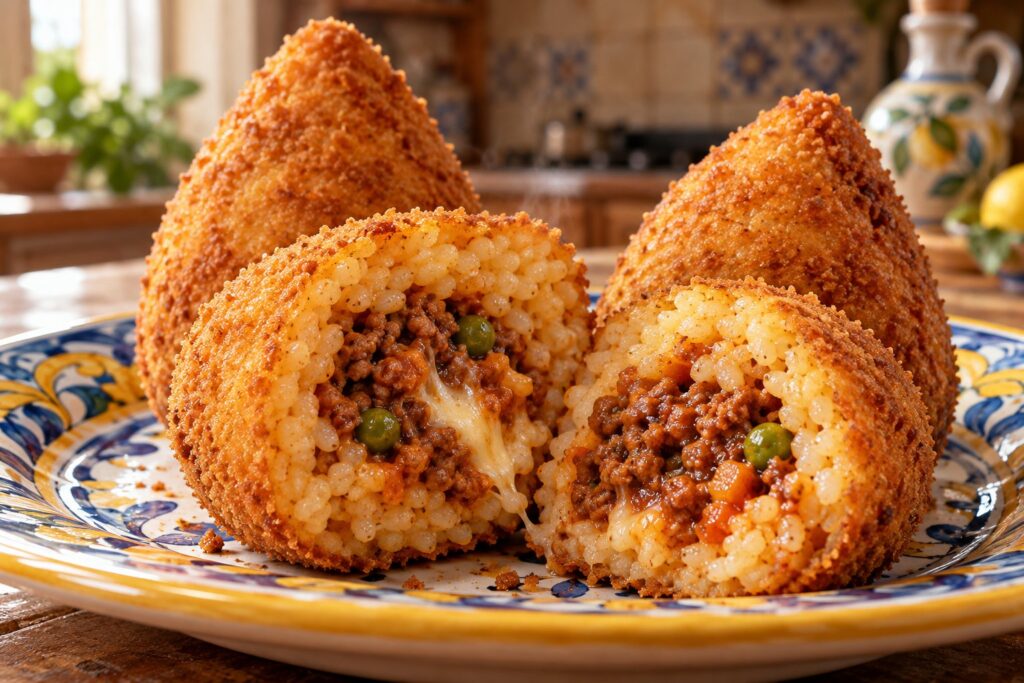
Arancini are fried rice balls with a filling, most often ragù with peas, or ham and cheese. Order one as a snack or a light lunch, not as a starter before a full meal.
What do locals eat by region?
The island has no single menu: the west leans on couscous and fish, the east on pasta and vegetables from the volcanic soil, the southeast on baked pastries and chocolate. Choose dishes for the area you are in rather than ticking every classic everywhere.
- Trapani and the west: fish couscous (cuscus) cooked with a seafood broth, and busiate, a hand-rolled spiral pasta served with pesto trapanese made from tomato, almonds and basil. The Arab influence is strongest here.
- Palermo: pasta con le sarde and the street food culture. For a stall-by-stall guide to panelle, sfincione and the market snacks, see our Palermo city guide.
- Catania and Etna: pasta alla Norma, fresh fish from the morning market, and pistachios from Bronte on the slopes of the volcano, used in pastries and ice cream.
- Messina coast: swordfish (pesce spada), grilled or rolled into involtini with breadcrumbs and herbs.
- Ragusa and Modica: scacce, folded flatbreads with fillings of tomato, cheese or vegetables, and Modica chocolate, which is worked cold so the sugar crystals stay and the texture is grainy.
Combine these places with a beach stay in Sicily
Packages with flight and hotel for Taormina, Cefalù or the south coast.
Show Sicily offersWhy do arancini have two spellings, and which one do you order?
In Palermo and the west the rice balls are called arancine, feminine, and are round. In Catania and the east they are arancini, masculine, and are often cone-shaped like a small volcano. Both names appear on menus, and the argument about which is correct is part of the local entertainment.
If you want one rule: choose the shape of the region you are standing in. In either city, buy them from a bar or rosticceria that is busy, where they come out of the fryer in batches instead of sitting under a lamp.
Which Sicilian desserts and drinks are worth the calories?
Cannoli, cassata and granita are the three to prioritise. Each depends on freshness, so the question to ask is when it was filled or made.
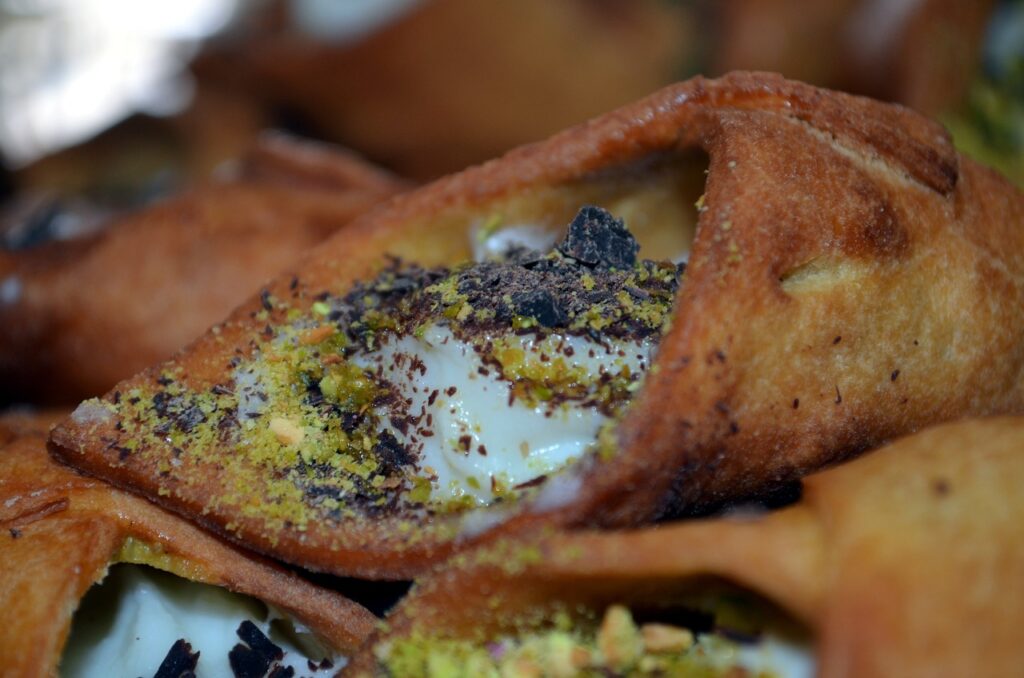
Cannoli are fried pastry tubes filled with sweetened sheep’s milk ricotta. The best are filled when you order, because a filled shell goes soft within a short time. If the shells sit in the display case already filled, move on.
Cassata siciliana is a cake of sponge, ricotta, marzipan and candied fruit, covered in bright green icing. It is very sweet and best shared. Frutta martorana, marzipan shaped and painted like fruit, is a pastry-shop speciality and a common gift.
Granita is a semi-frozen ice made with lemon, almond, coffee, mulberry or other flavours. In summer Sicilians eat it for breakfast with a soft brioche bun, tearing off pieces of bread and dipping them in. The texture is coarser in Palermo and smoother in Catania, and almond and pistachio flavours are common on the east coast.
Which Sicilian wines should you order?
Order the wine of the area you are eating in, and ask for a glass of the house local before opening a long list. Sicily’s main wines map neatly onto what you will eat.
- Etna Rosso is made mainly from Nerello Mascalese on volcanic soil. It is lighter and more mineral than many people expect, and works with grilled meat and pasta with tomato.
- Etna Bianco is mainly Carricante, fresh and citrusy, suited to fish and starters.
- Nero d’Avola is a fuller red grape and a safe match for aubergine dishes and meat.
- Grillo and Catarratto are the usual whites in the west, good with sardines, couscous and fried food.
- Marsala is a fortified wine from the Trapani area, made in dry and sweet styles. Sweet Marsala suits dessert, dry Marsala suits a cheese board. Cooking Marsala sold in supermarkets is a different product.
Sicily also makes a bitter herbal amaro, often served after dinner, if you like to end on something other than sugar.
How do you order in Sicilian restaurants and avoid the traps?
Treat lunch and dinner as two or three courses and expect a small cover charge (coperto) on the bill, which is normal in Italy and not a trick. Meals start later in the evening than in northern Europe, so arriving early may mean an empty room.
- Ask for the dish of the day and for what is in season. Sea urchin pasta (spaghetti ai ricci) is a delicacy that depends on the season and the catch.
- Fresh fish is often sold by weight. Ask for the price of the portion or the total before it is cooked.
- Be careful with long menus that list every classic in six languages with photographs. Short menus with local dishes in Italian tend to be better.
- Eat the sweet things where they are made: a pasticceria for cannoli and cassata, a bar or gelateria for granita.
- Coffee is taken standing at the counter and is cheaper there than at a table.
If you would rather learn the dishes by cooking them, see our guide to things to do in Sicily for cooking classes, market visits and wine tastings.
FAQ
What is the most typical dish of Sicily?
There is no single answer, but pasta alla Norma, caponata and arancini are the three that most visitors meet first. If you want the most local choice, ask for pasta con le sarde in Palermo or couscous with fish around Trapani.
Is Sicilian food spicy?
Mostly not. Flavours come from citrus, herbs such as wild fennel, oregano and mint, capers and vinegar. Some dishes use a little chilli, but heat is not a defining feature of the cuisine.
Is Sicilian food vegetarian friendly?
Largely yes. Caponata, pasta alla Norma, panelle, sfincione, grilled vegetables and many pasta dishes contain no meat. Check fillings of arancini and scacce, and ask about lard, which is used in some breads and pastry.
What is breakfast like in Sicily?
A cornetto or brioche with coffee at a bar, eaten standing, is the standard. In summer, granita with a brioche bun replaces it, especially on the east coast.
What is the difference between cannoli and cassata?
Cannoli are fried pastry tubes filled with sweet ricotta. Cassata is a sponge cake layered with ricotta and marzipan and decorated with candied fruit. Both use ricotta, but cannoli are a crisp snack and cassata is a rich cake.
Which Sicilian wine should I bring home?
Etna Rosso suits people who like lighter reds, Nero d’Avola those who prefer fuller wines, and a bottle of sweet Marsala makes a good gift. Wine shops (enoteche) will pack bottles for travel, which is safer than carrying them loose.
If food is the reason for your trip, tell us which towns you want to eat in and we will build the route and bookings around it through Travelissimo’s travel booking service.
Image credits: Travelissimo; AI-generated | Travelissimo; Pixabay / WebLab24_Siti_Web
 Holiday Apartment or Hotel? How to Choose and Book Well
 Best Beaches in Europe 2027: Eight Beaches and How We Chose Them
 Most Popular Cities in Europe 2027 and When to Go
 Summer Holidays 2027: When to Book and Where to Go