7 min read · Published: October 2, 2023 · Updated: October 29, 2026 · Prices and details checked: October 2026
Palermo is easiest to understand as four old quarters that meet at one crossing, the Quattro Canti. Each quarter has its own character and its own market or landmark, and the historic centre is compact enough to cover on foot in a single day. This guide explains what each quarter offers, what to eat in the markets and how to link it all into one walk.

Key takeaways
- The Quattro Canti, where Via Maqueda crosses Corso Vittorio Emanuele, is the natural starting point: the Kalsa, Albergheria, Capo and Vucciria districts all begin here.
- Ballarò (Albergheria) and Capo are the two big street markets for a full meal on foot; Vucciria is better known for its evenings.
- The classic snacks are panelle, pane con la milza and sfincione, all cheap and all sold from stalls and small shops.
- A single AMAT bus ticket costs 1.40 EUR and is valid for 90 minutes. A day ticket costs 3.50 EUR, but the centre itself is walkable.
- The Normans’ palace, the cathedral and Monreale are covered in our must-see guide to Sicily, not repeated here.
Table of contents
- How is the historic centre of Palermo divided?
- What is there to see and eat in Albergheria and the Ballarò market?
- What makes the Kalsa different from the other districts?
- Is the Capo market worth a visit if you have already seen Ballarò?
- And what about Vucciria?
- How do you see Palermo’s districts in one day?
- How do you get around Palermo?
- FAQ
How is the historic centre of Palermo divided?
The old centre splits into four districts around the Quattro Canti: Albergheria to the south-west, Capo to the north-west, the Kalsa to the south-east and the Vucciria area (also called Loggia) to the north-east. Two main streets, Via Maqueda and Corso Vittorio Emanuele, cross at this point and make orientation simple.
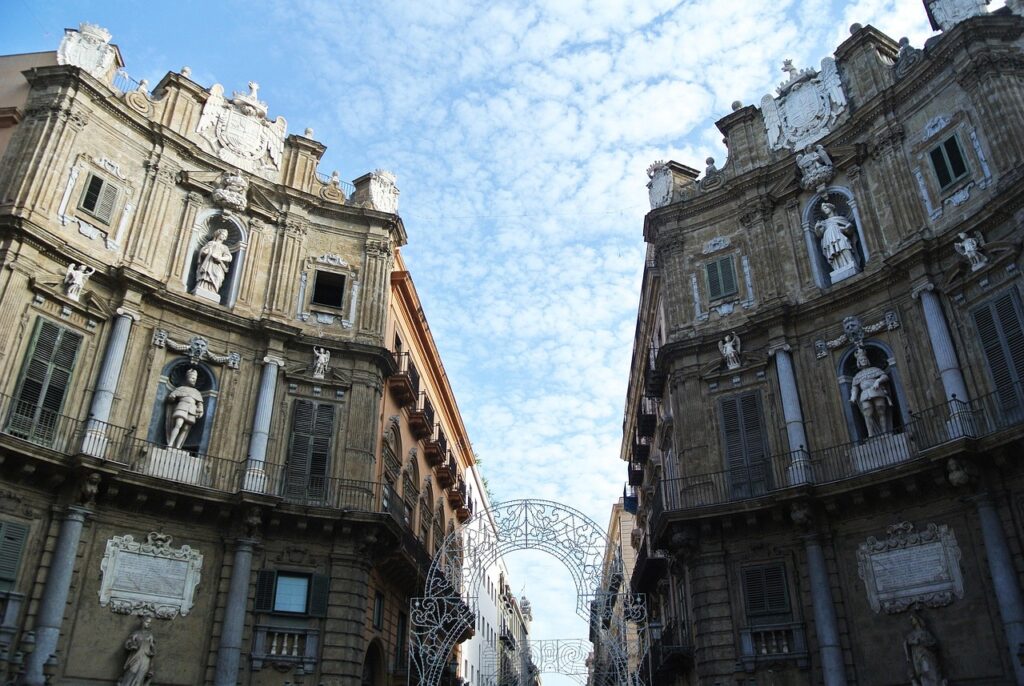
Thinking in districts helps you plan. Albergheria and Capo are the lived-in, market-heavy western side. The Kalsa is quieter and leans towards palaces and churches near the sea. Vucciria sits towards the port and fills with people after dark. The streets are narrow and some are in poor repair, so wear comfortable shoes.
What is there to see and eat in Albergheria and the Ballarò market?
Albergheria is the district for Ballarò, the market that fills the streets south of the crossing with fruit, vegetables, fish, spices and hot food. Come in the morning, when stalls are fully stocked, and treat it as lunch rather than a stop on the way to something else.
This is also the best place to try the three Palermo classics:
- Panelle: thin fritters made from chickpea flour, often eaten in a bread roll.
- Pane con la milza: a soft roll filled with sliced veal spleen, known locally as pane ca meusa. Ask for it with or without cheese and lemon, and order a small one first if you are unsure.
- Sfincione: a thick, soft, pizza-like bread topped with tomato, onion and breadcrumbs, sold by the slice from bakeries and street stalls.
Take cash and eat standing up, as most locals do. Keep bags closed in the crowded lanes.

Palermo’s arancine (stuffed rice balls) are also sold at bars and fried-food counters across the centre. For a fuller list of Sicilian dishes and how to order them, see our guide to Sicilian cuisine.

Combine these places with a beach stay in Sicily
Packages with flight and hotel for Taormina, Cefalù or the south coast.
Show Sicily offersWhat makes the Kalsa different from the other districts?
The Kalsa is the calmer, more cultural quarter, and it was originally the Arab district of the city. It stretches from the Quattro Canti towards the sea and holds palaces, small churches and the leafy Piazza Marina.
Many visitors use it for the slower part of the day. Palazzo Abatellis, a museum building, and Palazzo Steri on Piazza Marina are the best-known stops for anyone who likes art and architecture. Otherwise the pleasure here is wandering: courtyards, side streets and cafés where locals stop for coffee or granita. Parts of the district are still being restored, so expect a mix of polished and worn buildings, which is part of Palermo’s appeal.
Is the Capo market worth a visit if you have already seen Ballarò?
Yes, if you want a second market with a different mood. Capo runs through the narrow streets in the north-west of the centre, near the Teatro Massimo, and feels more local and less visited than Ballarò. Fish, vegetables, meat and bread dominate, and several snack counters serve the same street food in the same price range.
Because the two markets are on opposite sides of the centre, a good compromise is to pick one for lunch and use the other as a short walk-through on your way to a landmark. Visiting both for a full meal in one day is possible, but you will be very full.
And what about Vucciria?
Vucciria was once the best-known market in the city, but today it is better known as a place to spend the evening. Its square and surrounding lanes, close to the port, fill with locals and visitors who come for drinks, grilled food and conversation. If you want the market atmosphere without the morning rush, this is where to end the day.
Opening days and hours of the markets vary and are not published on an official site, so check locally or ask your accommodation on the day.
How do you see Palermo’s districts in one day?
A sensible one day route starts in Albergheria in the morning, moves along Corso Vittorio Emanuele to the Quattro Canti, crosses the Kalsa in the afternoon and finishes in Vucciria or Capo in the evening. Allow short stops rather than long visits, and decide the day’s big sights in advance.
- Morning: Ballarò market for a snack lunch, with panelle first and pane con la milza if you are curious.
- Late morning: The Palazzo dei Normanni with its Cappella Palatina is a short walk west of Albergheria. Entry is Monday to Saturday from 8:30 and the last admission is at 16:30; on Sundays and holidays the last admission is at 12:30. Check the current ticket price before you go.
- Midday: Walk back east along Corso Vittorio Emanuele. The cathedral lies on this street. Monreale is a separate excursion outside the city, and both are described in the Sicily must-see guide.
- Afternoon: Cross the Quattro Canti into the Kalsa, spend time around Piazza Marina and the churches, and stop for a granita.
- Evening: Head to Vucciria for drinks and food, or to Capo if you prefer a quieter, more local evening meal.
On a rainy day, shorten the market stops and spend longer indoors at the palace chapel and the museums.
How do you get around Palermo?
For the historic centre, walking is the best option, and buses are mainly useful for the edges of the city. The city bus operator AMAT sells a single ticket for 1.40 EUR (valid for 90 minutes), or 1.80 EUR if you buy on board. A day ticket costs 3.50 EUR and is valid until the end of service. Multi-day passes are available for 2, 3 and 7 days at 6.00, 8.00 and 16.50 EUR.
Buy tickets before boarding where possible to save 40 cents per trip. Do not drive into the centre: much of it is a restricted traffic area, and parking is hard to find.
FAQ
How many days do you need in Palermo?
One full day is enough to walk the historic districts and try the main street food. A second day lets you add the Palazzo dei Normanni, the cathedral and Monreale at a relaxed pace. Our Sicily must-see guide covers these sights in more depth.
Which Palermo neighbourhood is best to stay in?
For a first visit, stay in or near the historic centre, close to the Quattro Canti, so that you can walk to most places. The Kalsa is quieter at night, Capo and Albergheria are livelier and noisier, and the area around Vucciria is busy in the evenings. Choose according to how much late noise you can accept.
Is street food in Palermo safe to eat?
Yes, if you choose busy stalls with a fast turnover, where food is cooked or fried fresh in front of you. Pane con la milza is an acquired taste, so share one before ordering a second. If you have allergies, ask about ingredients, as breadcrumbs, cheese and fish appear in many snacks.
Is there a tourist tax in Palermo?
Yes, the city charges a local tourist tax. It applies for a maximum of four consecutive nights per stay. The amount depends on the type of accommodation, so ask your host or hotel for the current rate.
Is Palermo safe for tourists?
Palermo is a busy city and the usual big-city rules apply. Keep valuables out of sight in markets and on crowded buses, and avoid carrying more cash than you need. Daytime walks through the historic districts are common and unproblematic for most visitors.
If you want help with flights, accommodation or a wider Sicily itinerary, Travelissimo can arrange the booking for you via our travel booking service.
Image credits: Pixabay / heibergerwork; Pixabay / johannaviio
 Seychelles with Kids: Beaches, Reserves and Turtles
 A Week on a Yacht: Daily Life, Space, Seasickness and Cost
 Yacht Charter in Malta: What to Know Before You Book
 How to Behave at a Maltese Festa: A Visitor’s Guide