7 min read · Published: August 29, 2023 · Updated: October 29, 2026 · Prices and details checked: October 2026
Mdina is small enough to walk end to end in an hour, and a visit with a cathedral and one museum fits comfortably into two to three hours. The old walled town sits on a hill in the middle of Malta, mostly closed to ordinary traffic, which is why it is called the Silent City. This guide follows the order a walk naturally takes: arrival, lanes, bastions, cathedral, museums, evening.
Key takeaways
- Allow two to three hours for Mdina itself, plus extra time if you add the neighbouring town of Rabat.
- Arrive by public bus from Valletta or Sliema; the Day Route fare is 2.00 EUR in winter and 2.50 EUR in summer.
- The bastions are free to walk and give the widest views over the island’s flat centre.
- The National Museum of Natural History costs 5.00 EUR for adults; Mdina Dungeons costs 6.00 EUR.
- Go in the late afternoon: day groups thin out and the lanes are at their quietest.
Table of contents
How do you get to Mdina and where does the walk start?
Take a public bus to the Mdina and Rabat area and walk the last few minutes to the main gate. Buses run from Valletta and from the Sliema side, and the stop is outside the walls, so you enter on foot.
A single Day Route ticket costs 2.00 EUR in the winter period and 2.50 EUR in summer, valid for two hours with free changes. Check the current route number and timetable on the Malta Public Transport site before you leave, because routes are adjusted from season to season. Travelling without a valid ticket carries a 50 EUR fine.
Visitors cannot drive into the town, so a car brings no advantage here. If you do come by car, park outside the walls and cross on foot.
What is the best way to walk through Mdina?
Enter by the main gate and let the lanes decide. The street plan is a tight grid of narrow lanes with few signs, and the town is so compact that you cannot get lost for long.
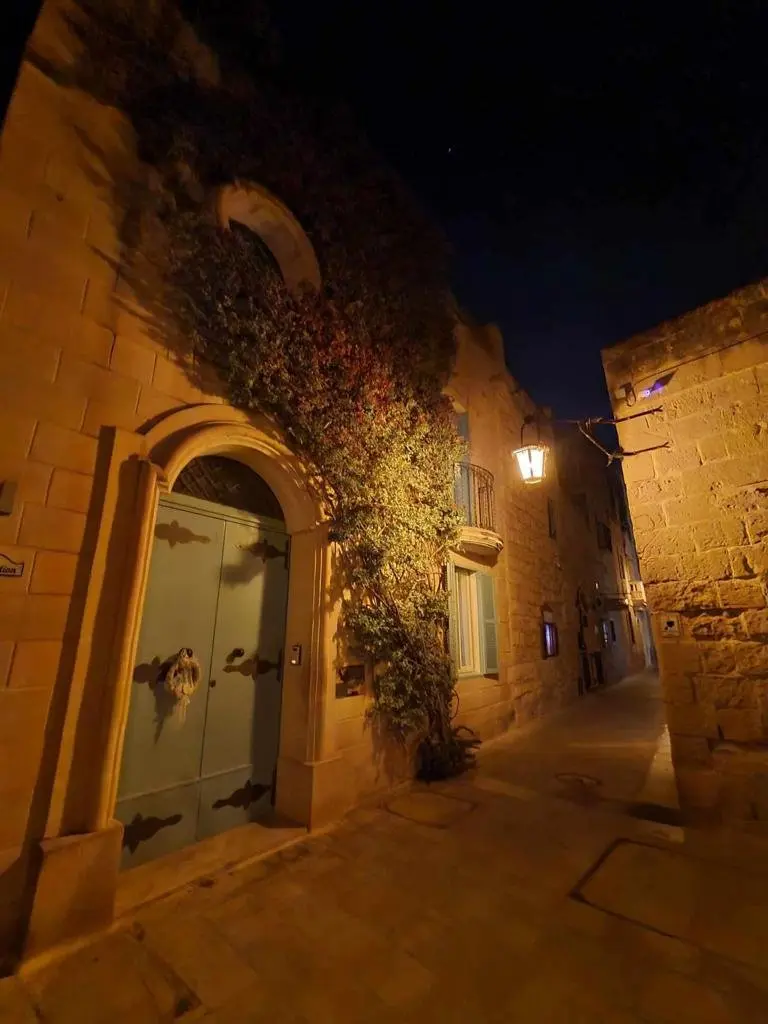
Start at the gate, follow the main street toward the cathedral square, then leave it for the side lanes. Here you see the stone facades, the doorways with knockers and coats of arms, and the small courtyards that give Mdina its character. The lanes are narrow and often shaded, which helps on a hot day. Wear flat, grippy shoes, because the paving is worn and uneven.
Combine your trip with a hotel in Malta
Flight plus hotel in Sliema, St. Julian's or Gozo for your dates and budget.
Show Malta offersWhere are the best views from the bastions?
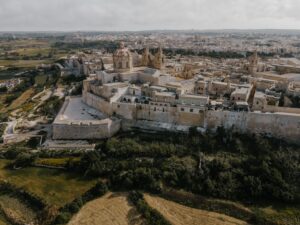
The best views are from the bastion terraces on the edge of the town, which are open to walk and free of charge. From the high ground you look across the central plain of Malta toward the coast on a clear day.
Walk the outer edge slowly. The walls explain why this hill was chosen for a capital: you see approaching roads for miles. Mdina was the capital of Malta until the Knights of St John founded Valletta in the 1500s, and the contrast between the two is a good reason to see both. Bring water in summer, as the terraces are exposed and offer little shade.
Our tip: For a break with a view, try the Fontanella Tea Garden at 1 Bastion Street, right on the walls. It serves homemade cakes, and you look out over most of the island. The tea garden does not take reservations, so choose a quieter hour.
What should you see at St Paul’s Cathedral?
St Paul’s Cathedral is the one stop worth planning your time around. It stands on the main square, with a baroque facade designed by the Maltese architect Lorenzo Gafà and built in the late 17th century.
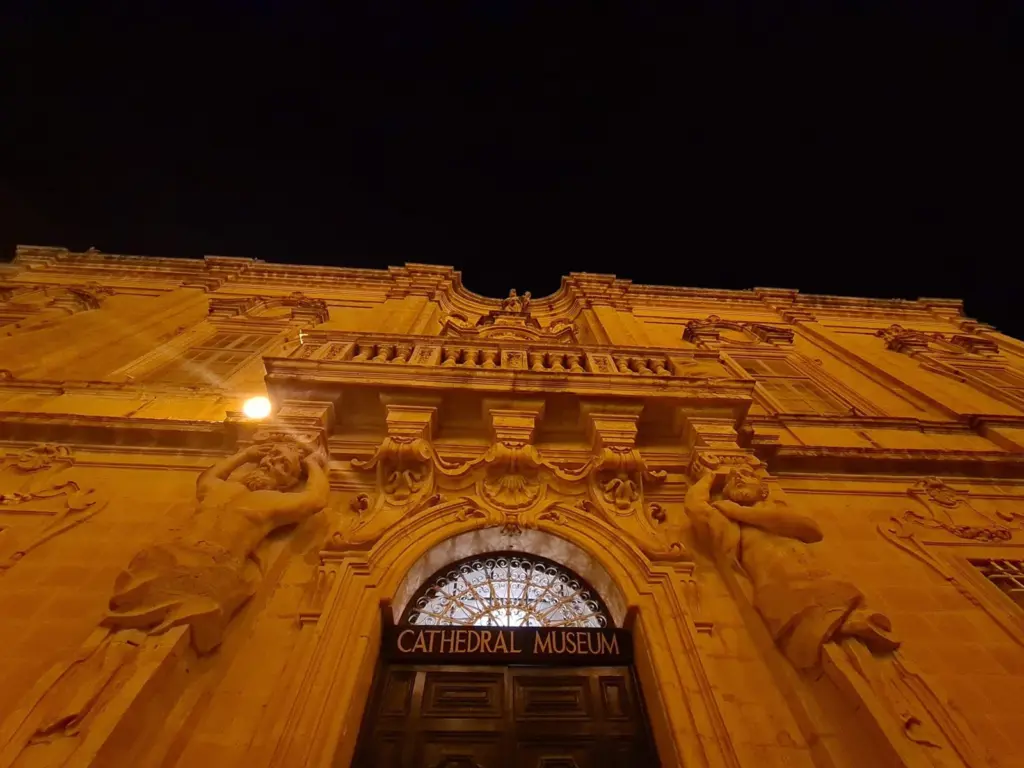
Inside, look at the decorated floor, which is made of memorial tomb slabs, and at the painted ceiling. The cathedral also has a museum next door on the same square, so check at the cathedral ticket desk what is included in the current ticket, as prices and combinations change. Dress with covered shoulders and knees, as in any active church, and expect services to restrict visits at certain times.
Which museums in Mdina are worth the entry fee?
If you add one museum, make it the National Museum of Natural History, run by Heritage Malta. Adults pay 5.00 EUR, young people, seniors and students pay 3.50 EUR, children aged 6 to 11 pay 2.50 EUR, and children aged 1 to 5 enter free. Last entry is 30 minutes before closing, and Heritage Malta closes its sites on 1 January, Good Friday, and 24, 25 and 31 December.
Mdina Dungeons is a private exhibition about crime and punishment in the town’s past. Adults pay 6.00 EUR, students 3.00 EUR, and a family ticket for two adults and two children under 16 is 15.00 EUR. It is theatrical rather than scholarly, so it suits families with older children better than visitors looking for historical depth.
For deeper history in the area, go to Rabat, just outside the gate. St Paul’s Catacombs (6.00 EUR for adults) and Domvs Romana (6.00 EUR for adults) are both run by Heritage Malta and are a short walk away. If you plan to visit several Heritage Malta sites within a month, compare the single prices with the 60.00 EUR adult Multisite Pass, valid for 30 days, though note it does not cover every site.
When is Mdina at its best?
Late afternoon and early evening are the best times, because the day-tour groups leave and the stone changes colour in lower light. The town has a calm that disappears in the middle of the day in high season.
Our tip: If you want Mdina almost to yourself, come early in the morning, before the day visitors arrive. The morning light on the pale limestone is at least as beautiful as the evening glow.
In summer, avoid the hours around noon, when the lanes hold heat. In winter, mornings are pleasant for walking and the bastion views are usually clearer. Evening is also when the few restaurants and cafés inside the walls fill up, so book ahead if you want a table with a view. Stay for dinner only if you do not mind that the last buses are less frequent than in daytime, and check the return timetable first.
If you want to understand how Mdina fits into the larger story of the islands, our Malta history route places it alongside the other major sites.
FAQ
Is Mdina worth visiting?
Yes, if you like historic towns you can explore on foot. It is compact, car free and easy to combine with Rabat. If you prefer beaches and nightlife, one afternoon is enough.
How long do you need in Mdina?
Plan two to three hours for a relaxed walk with a visit to the cathedral or a museum. Walking the lanes and bastions alone takes about an hour. Add time for Rabat if you want the catacombs or Domvs Romana.
Can you drive into Mdina?
No, the town is largely closed to visitors’ vehicles. Park outside the walls or take the bus, and walk in through the main gate.
Is Mdina free to visit?
Walking the lanes and the bastions costs nothing. You pay only for individual sights such as the Natural History Museum (5.00 EUR for adults) or Mdina Dungeons (6.00 EUR for adults).
Why is Mdina called the Silent City?
The name comes from the quiet that follows from the town’s size and the near absence of traffic. Only a small number of residents live inside the walls, so the lanes are calm outside of busy visiting hours.
Is Mdina suitable for children and wheelchairs?
Children usually enjoy the lanes and the dungeons, and under 5s enter Heritage Malta sites free. The paving is uneven and there are steps, so strollers and wheelchairs make slow progress. Plan a shorter route and check access at each site beforehand.
Mdina works best as a half day trip from the Sliema and St. Julian’s side of the island, where Travelissimo arranges holiday apartments. If you are staying elsewhere or combining Malta with other destinations, you can arrange flights, hotels and transfers through our booking service.
Image credits: Polina Kovaleva, Pexels; Pixabay / 2427999; Travelissimo
Sources (10)
Prices, times and rules in this article come from these sources. Last checked: October 29, 2026.
- publictransport.com.mt / en/fares
- heritagemalta.mt / explore/national-museum-of-natural-history
- mdinadungeons.com
- heritagemalta.mt / store/c95
- heritagemalta.mt / explore/st-pauls-catacombs
- heritagemalta.mt / explore/domvs-romana
- heritagemalta.mt / opening-hours
- heritagemalta.mt / explore/tarxien-temples
- fontanellateagarden.com.mt / home
- hubpymalta.com / what-to-do/fontanella-malta.html
 Holiday Apartment or Hotel? How to Choose and Book Well
 Best Beaches in Europe 2027: Eight Beaches and How We Chose Them
 Most Popular Cities in Europe 2027 and When to Go
 Summer Holidays 2027: When to Book and Where to Go