8 min read · Published: October 24, 2024 · Updated: October 29, 2026 · Prices and details checked: October 2026
Malta has a festival for almost every month: Carnival in the days before Ash Wednesday, Holy Week processions at Easter, village festas with fireworks from June to September, a free open-air concert in summer, Notte Bianca in Valletta in autumn and Christmas lights and cribs in December. Most of it is free to watch. This calendar tells you what happens when and how to get there, so you can pick your travel dates around the events you care about.
Key takeaways
- Carnival takes place in the days before Ash Wednesday, mainly in Valletta and Floriana, with a separate, rougher carnival in Nadur on Gozo.
- Good Friday brings silent processions in several towns; Easter Sunday morning brings the running of the Risen Christ statue, for example in Vittoriosa and Qormi.
- Village festas run from June to September, nearly every weekend in a different parish, with band marches, fireworks and the Saturday night as the highlight.
- Fixed dates you can plan around: 29 June (Mnarja at Buskett), 15 August (Santa Marija in several parishes) and 8 September (Victory Day regatta in the Grand Harbour).
- Night buses (N routes) cost 3.00 EUR per ride and the Sliema to Valletta ferry runs until after midnight in summer, so late events are reachable without a car.
Table of contents
When is Carnival in Malta and where is it held?
Carnival in Malta falls on the days immediately before Ash Wednesday, so it moves with Easter and lands in February or early March. The main programme is in Valletta and Floriana: decorated floats parade along Republic Street and the Floriana granaries, costumed dance companies compete, and children’s parades fill the afternoons.
Watching is free. The best viewing is early on the main parade days, because the crowd thickens from mid-afternoon. Expect loud music, confetti and stalls selling prinjolata, the cream and pine nut cake sold only during Carnival.
Nadur on Gozo does Carnival differently: no official programme, no judging, no polished floats. People walk the village streets in home-made, often grotesque costumes, and the mood is darker and more spontaneous. Valletta works in the daytime and Nadur after dark, reached by the Gozo ferry from Cirkewwa in about 25 minutes.
February also brings the feast of St Paul’s Shipwreck in Valletta on 10 February, a public holiday with its own procession, so a trip in that month can often include both.
What happens in Malta during Holy Week and Easter?
Holy Week is the most solemn period in the Maltese calendar; the two days to plan for are Good Friday and Easter Sunday. On Good Friday, towns including Valletta, Mosta, Żebbuġ, Qormi, Rabat and Naxxar hold processions in which life-size statues of the Passion are carried through the streets, accompanied by people in biblical costume and brass bands playing funeral marches.
The processions start in the late afternoon and last several hours. Stand near the parish church early, because the statues leave from there, and dress respectfully. Good Friday is a public holiday: Heritage Malta sites are closed that day and St John’s Co-Cathedral is closed on Sundays and public holidays, so plan museum visits around it.
Easter Sunday is the opposite in mood. In the morning, the statue of the Risen Christ (l-Irxoxt) is carried at a run through Vittoriosa, Cospicua, Qormi and other towns, with the crowd cheering the bearers on. Bakeries sell figolli, almond-filled iced pastries, in the week before. If you only have one day, the Sunday run is shorter and easier to catch.

Combine your trip with a hotel in Malta
Flight plus hotel in Sliema, St. Julian's or Gozo for your dates and budget.
Show Malta offersWhen are the village festas and which ones should you see?
Village festas run from June to September, with a festa somewhere on Malta or Gozo almost every weekend. Each parish celebrates its patron saint over about a week, with the main events from Friday to Sunday: band marches through the streets, the church lit up and hung with red damask, street stalls selling nougat (qubbajt), and fireworks on Saturday night and before the Sunday procession.
The core experience is similar everywhere, so choose by date and location. A few fixed dates make planning easy. On 29 June, Mnarja (the feast of St Peter and St Paul) is celebrated at Buskett Gardens near Rabat with a night of folk singing, rabbit dinners and an agricultural show. On 15 August, Santa Marija is celebrated in several parishes at once, among them Mosta, Mqabba and Victoria on Gozo, and Mqabba in particular is known for the fireworks produced by its own factories. On 8 September, Victory Day, the season closes with the traditional rowing regatta in the Grand Harbour, best watched from the Valletta waterfront or the Three Cities side.
Fireworks are the loudest part. Ground fireworks (nar tal-art), the spinning Catherine wheels in the village square, are usually set off late on Saturday evening, and aerial displays run through the weekend. Daytime petards start early in the morning, so a festa village is not the place to stay if you want quiet.
Take the bus, because streets are closed and parking disappears. A single ticket costs 2.00 EUR in winter and 2.50 EUR in summer, valid for two hours including changes; a night bus ride costs 3.00 EUR, and the seven-day Explore card at 25.00 EUR covers day and night routes. How to behave at a festa and where to stand is covered in our guide to enjoying festivals in Malta like a local.
Which summer music events are worth a trip?
The best-known summer concert is Isle of MTV, a free open-air show at the Floriana granaries with international pop acts on a single summer evening. Date and line-up are announced in spring, and the crowd is large and young. Arrive early for a decent spot and plan on walking back to Valletta or Sliema, because buses are packed.
Summer also brings the Malta International Arts Festival in Valletta, with concerts, theatre and dance in historic venues, some free and some ticketed, and a jazz festival on the Valletta waterfront. Dates change year to year, so check the official programmes before fixing your flights.
What is Notte Bianca and when does it happen?
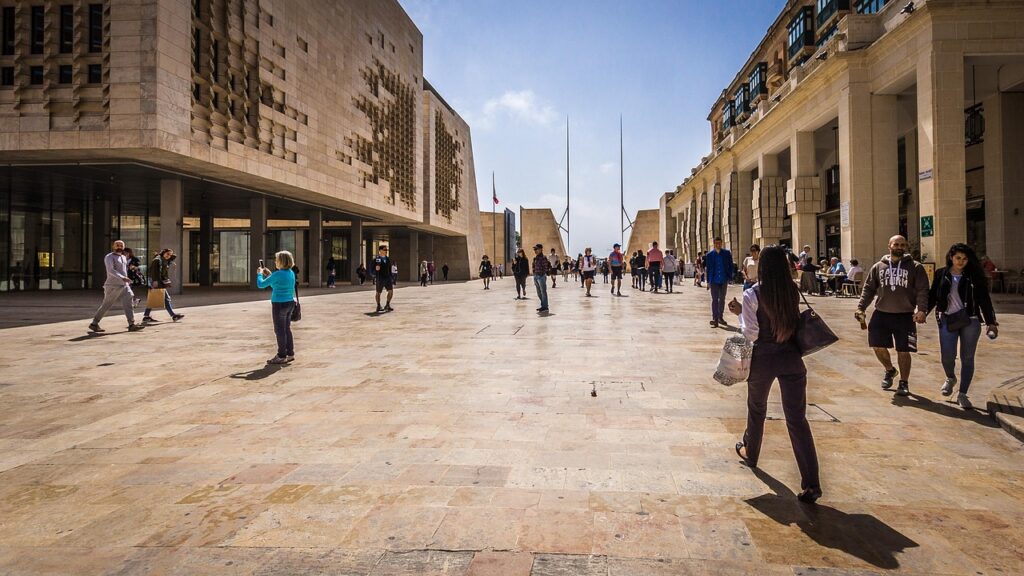
Notte Bianca is a one-night festival in Valletta in autumn when museums, palaces, churches and state buildings open late and for free, with concerts, exhibitions and street performances in between. It takes place on a Saturday evening and runs into the small hours, and the streets are crowded all night, so it is the one evening a year when you can see the Grand Master’s Palace or the Auberge de Castille without queueing in daytime heat.
Go early for the buildings normally closed to the public and leave the street music for later. The Sliema to Valletta ferry is the easiest way in and out: it runs every 30 minutes, costs 3.50 EUR one way after 19:30, and on the summer timetable (1 June to 31 October) the last departures run until around 01:00. From the Three Cities, the Upper Barrakka lift runs until midnight in summer and is free with a valid ferry ticket.
What does Malta offer at Christmas and New Year?
December in Malta means Christmas lights on Republic Street in Valletta, cribs (presepji) in churches and private homes, and a season of concerts and markets rather than a single big event. The most Maltese tradition is the crib: parishes and families build elaborate presepji, some mechanical, and open them to visitors. On Gozo, Għajnsielem stages a live Bethlehem village with actors, animals and craftspeople in the weeks around Christmas, and Midnight Mass on 24 December traditionally includes a sermon delivered by a child.
Heritage Malta sites are closed on 24, 25 and 31 December and 1 January. December is low season for accommodation, which makes it one of the cheaper times for a week in Valletta or Sliema, and New Year’s Eve ends with a concert and countdown in Valletta.
FAQ
Are Malta’s festivals free to attend?
Carnival, Holy Week processions, village festas, Isle of MTV and Notte Bianca are free. You pay only for food, drink and transport. Individual concerts within the arts festivals and some indoor events are ticketed.
Which months have the most festivals in Malta?
June to September is the busiest period, with a village festa nearly every weekend and the summer concerts in Valletta and Floriana. If you prefer cooler weather, Carnival (February or early March) and Holy Week (March or April) offer the strongest traditions with far fewer tourists.
Can I combine a festa with a beach holiday?
Yes, and summer is the time to do it. Stay in Sliema or St Julian’s for the sea and bus links, then take a bus out to the festa village on Saturday evening. Check the last departure from the village before you go.
Is Carnival suitable for children?
The Valletta and Floriana carnival is designed for families, with children’s parades, costume competitions and daytime floats. Nadur on Gozo is adult-oriented, late and often macabre, so leave the children in Valletta for that one.
How far in advance should I book accommodation for a festival?
Book early for Carnival, Easter, the 15 August weekend and Isle of MTV, because Maltese families and returning emigrants travel then too. For ordinary festa weekends, availability is normally fine with a few weeks’ notice.
Pick the event that matters most to you, fix those dates first and build the rest of the trip around them. For late evenings, a base within walking distance of the Valletta ferry and the main bus routes helps: our holiday apartments in Sliema and St Julian’s are set up for that, and for flights around festival weekends you can use our booking service.
Image credits: Pexels; Pixabay / Hobbyfotography; Pixabay / MICHOFF
 Seychelles with Kids: Beaches, Reserves and Turtles
 A Week on a Yacht: Daily Life, Space, Seasickness and Cost
 Things to Do in Pretoria: A Day Trip Plan from Johannesburg
 Sicilian Cuisine: What to Eat, Drink and Order in Sicily