7 min read · Published: February 19, 2024 · Updated: October 30, 2026 · Prices and details checked: October 2026
A festa is a village or town celebration for the parish patron saint, and as a visitor you are welcome to join as long as you follow a few unwritten rules. Dress modestly for church, stay behind the barriers during the procession, keep a safe distance from fireworks and treat the statue and the band as part of a religious event, not as a stage show. This guide covers how a festa day runs and how to act at each stage. For dates and a calendar, see our festivals guide.
Key takeaways
- A festa honours the patron saint of one parish, so every village runs its own version with its own band club, decorations and fireworks.
- The day starts early with church bells and band marches, so expect to be woken up if you stay nearby.
- The evening procession carries the saint’s statue through streets lined with crowds. Step back, stay quiet and do not cross in front of it.
- Fireworks are loud, close to the crowd and launched on the ground and in the air. Keep your distance and protect children’s ears.
- Wear covered shoulders and knees for any church service, and bring cash for street stalls.
Table of contents
- What is a festa, and why does it matter to the village?
- How does a festa day unfold from morning to fireworks?
- What should you wear to a festa?
- How should you behave during the procession?
- What do you eat and drink at a festa?
- How do you stay safe around the fireworks and crowds?
- FAQ
- Plan your stay around the village you want to see
What is a festa, and why does it matter to the village?
A festa is the main yearly celebration of a parish, held in honour of its patron saint, and it is organised by volunteers, church groups and local band clubs. Many Maltese towns and villages hold theirs in the warmer months, with a build-up of several days before the main one.
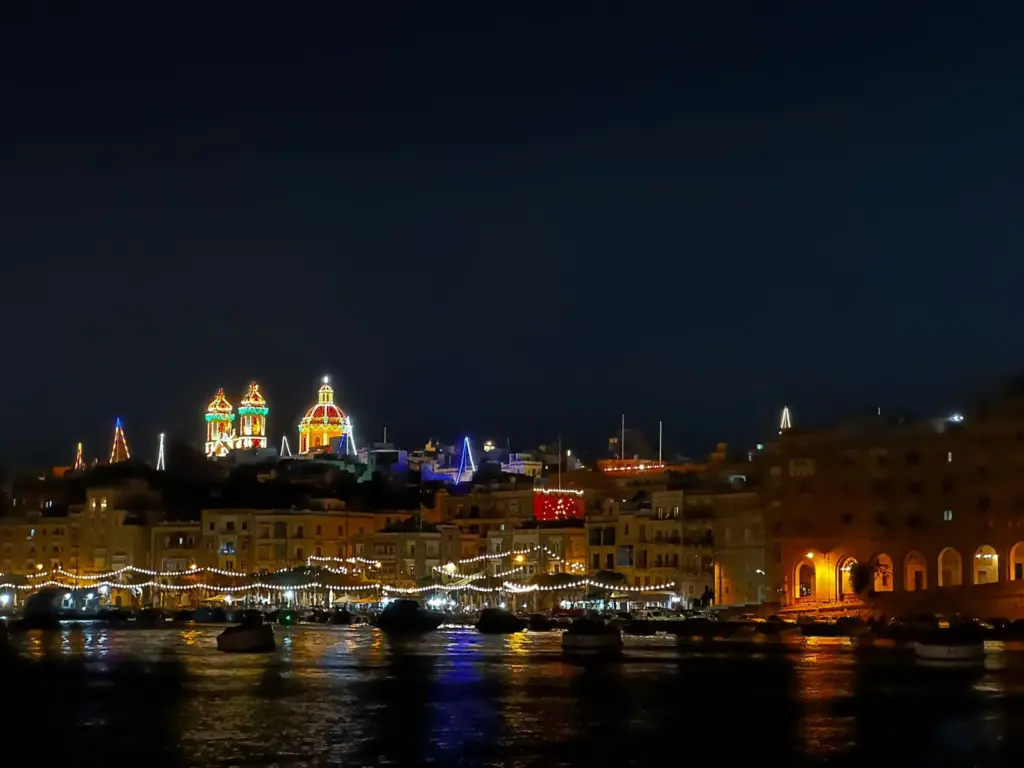
Streets and the parish church are decorated with banners, lights and statues. Rival band clubs and fireworks groups take real pride in outdoing the neighbouring village, so the feast is as much about community identity as about religion. Treat it as a family occasion that you are invited to observe.
How does a festa day unfold from morning to fireworks?
The main day follows a familiar order: bells and bands in the morning, a solemn church service, a long street procession in the evening, and fireworks to close. The exact timing differs from parish to parish, so ask at your accommodation or check the parish notices.
Morning. Church bells ring early, and brass bands march through the streets playing lively tunes. Cannon-like bangs from petards are common, and they are meant to be heard. If you want to sleep in, choose a stay outside the village centre during festa week.
Midday. The main Mass is held in the parish church, often with extra services. This is the part of the day to treat with the most respect. Visitors are welcome to look in, but do not walk around or take photos during the service.
Afternoon. Many villages are quieter while people eat with family and prepare. It is a good time to see the decorations without the crowd and to buy snacks.
Evening. The statue of the saint leaves the church on the shoulders of bearers, followed by the band, clergy and parishioners. The route runs through the decorated streets, and balconies are full of onlookers. When the statue returns to the church, the crowd often applauds and the band plays.
Night. Fireworks are the finale in many villages, followed by music and street food.

Combine your trip with a hotel in Malta
Flight plus hotel in Sliema, St. Julian's or Gozo for your dates and budget.
Show Malta offersWhat should you wear to a festa?
Dress for a church first and for a party second: covered shoulders and knees, and comfortable closed shoes you can stand in for hours. The easiest approach is light trousers or a long skirt and a shirt with sleeves, plus a scarf you can wrap over bare shoulders if needed.
Avoid swimwear and beach clothes in the village centre, even on a hot day. Bring sun protection and water for the long evening wait, and keep a light layer for after sunset.
How should you behave during the procession?
Stay behind the crowd line, keep your voice low and let the procession pass without crossing its route. The statue, the clergy and the bearers are the centre of the event, and many people along the route are praying or joining in the hymns.
- Do not step in front of the statue or the band to get a photo.
- Ask before photographing individuals, and avoid flash.
- If you are given a place at a balcony or terrace, thank your host and follow their lead.
- Do not touch the statue or its decorations.
- Silence your phone and keep conversations quiet when the route passes a church.
If you are unsure, watch what the locals do and copy it. People are generally friendly, and a small smile and thank you go far.
What do you eat and drink at a festa?
Street stalls sell traditional sweets and snacks, and trying them is part of the fun. Look for nougat (qubbajt) and sugared nuts, fried sweet dough, and savoury pastries such as pastizzi. Local beer and soft drinks are served at nearby bars and stalls.
Pay with cash where possible, since small stands may not accept cards. We do not quote prices here because they depend on the stall and the village. Compare a few stands before you buy, and throw your rubbish in the bins provided, as the cleanup the next morning is done by volunteers.
How do you stay safe around the fireworks and crowds?
Keep well back from the launch area and follow the instructions of the organisers and police. Festa fireworks are not the same as a licensed professional show at a stadium: ground displays, rotating wheels and loud aerial shells are often set off close to where people stand.
- Stay out of any cordoned zone, even if locals are standing near it.
- Protect children’s and pets’ hearing, or leave them with someone away from the noise.
- Keep bags closed and phones in a front pocket in tight crowds.
- Agree a meeting point with your group before the procession starts.
- Know the number of the emergency services (112) and where the nearest pharmacy or health centre is.
- Drink alcohol in moderation, since you will be standing for a long time in warm weather.
FAQ
Can tourists go to a festa?
Yes. Festas are public events, and visitors are welcome to watch the procession, listen to the bands and eat at the stalls. You are a guest at a parish celebration, so follow the dress and behaviour rules above. Entering the church during a service is fine if you stay quiet and respectful.
Is a festa free to attend?
Watching the procession, the bands and the decorations costs nothing. You pay only for food, drink and any souvenirs. Some parishes also set up paid seating or invite visitors to donate to the church, which is voluntary.
How do I get to a festa village without a car?
Public buses reach most towns, but on festa evenings the streets near the centre are often closed to traffic, so you may need to walk the last stretch. Check your route in advance and plan your return, as buses can be crowded after the fireworks. Taxis and ride apps may be slow to get through closed streets.
Can I take photos and videos?
In the streets, yes, and many locals film too. Keep a respectful distance, avoid flash and do not block the view of others. Do not photograph people at prayer from close up, and follow the signs or instructions inside the church.
Are festas suitable for children?
Yes, many families bring children, but the noise, crowds and late finish can be tiring. Bring ear protection for the fireworks, keep young children close in the crowd and plan a quiet break in the afternoon.
Are all festas the same?
No. Each parish has its own saint, band club and traditions, so the decorations, music and fireworks differ from village to village. Larger towns can feel bigger and busier, while small villages are often more intimate.
Plan your stay around the village you want to see
If you want a base close to the action but not inside the noise, our holiday apartments in Sliema and St. Julian’s give you easy access to the bus network for reaching festa towns, see our Malta apartments. We can also help plan the rest of your trip through our booking page.
Image credits: Pixabay / JanneG; Pixabay / pruslee; Travelissimo
 Italy Train Travel: Routes, Tickets and Saver Fares
 Garden Route Itinerary: Stages for Seven to Ten Days
 Train or Plane in Europe: Time, Cost and Comfort Compared
 Where to Stay in Mallorca for a Retreat, and When to Go