
8 min read · Published: September 15, 2024 · Updated: October 29, 2026 · Prices and details checked: October 2026
A good Thailand trip is planned in a fixed order: pick the season for the region you want, check entry rules with an official source, choose a base region, then work out how you move between places. Thailand has two coasts and a mountainous north that do not share one weather calendar, so “the best month” depends on where you go. This guide covers the planning decisions only. For specific places off the usual route, see our guide to lesser-known places in Thailand.

Key takeaways
- Choose the region first, then the month. The Andaman coast, the Gulf coast and the north follow different weather patterns.
- The Tourism Authority of Thailand (TAT) describes November and December as cool season, and says the monsoon is gone from the Andaman coast by November.
- Visitors from 93 countries and territories can enter without a visa for up to 60 days, but check your own nationality with the Thai embassy.
- Every non-Thai traveller, including children, must submit the Thailand Digital Arrival Card online within 3 days before arrival. It is free.
- Cover your shoulders and knees at palaces and temples, and expect to take your shoes off before entering buildings.
- Plan two or three bases rather than five. Long transfers eat days.
Table of contents
When is the best time to visit Thailand?
The most dependable weather for a first trip comes in the cool season from November, when the monsoon has left the Andaman coast and temperatures drop across the country. How good a month is, though, depends on the coast or region you pick.
TAT calls October “the end of the rainy season and the beginning of winter” and says the monsoon is ending on the Gulf of Thailand side. By November it describes the cool season proper, with no more monsoon on the Andaman coast and sea trips back on. In the northern mountains it can be cool: TAT quotes around 14 degrees Celsius at Huai Nam Dang National Park in Chiang Mai province. In December average temperatures are the lowest of the year, and TAT calls Chiang Mai’s December the high season month.
April is the hottest month. TAT says temperatures might reach 42 degrees Celsius in the north and northeast, and recommends coastal spots with sea breezes. For the islands, TAT names February to April as the driest months at Ko Phi Phi. TAT notes that Ko Tachai is closed for six months because of the monsoon, so check opening periods for national park islands before you fix dates.
July sits in the rainy season, which TAT describes as “rainy, moist and cool”. If your dates fall then, keep boat trips flexible.
What are the entry requirements for Thailand?
Many nationalities can enter without a visa for tourism for up to 60 days, but the list changes, so confirm your own case with the Thai embassy or consulate before booking. TAT states that visitors from 93 countries and territories qualify for visa-free entry for a period not exceeding 60 days, and that the stay can be extended at an Immigration Office for up to 30 more days.
Separately from the visa question, you must register online with the Thailand Digital Arrival Card (TDAC). It applies to all non-Thai nationals entering by air, land or sea, children and infants included. The Immigration Bureau says to submit it within 3 days before arrival, including the arrival day, and the official site is titled “No Fees Required”. Transit passengers who do not pass through immigration do not need one; anyone who leaves the airport does.

Combine these places with a beach stay
Search packages with flight and hotel for Phuket, Krabi or Koh Samui for your dates and budget.
Show Thailand offersWhich region should you base yourself in?
Pick regions by what you want to do, then limit yourself to two or three bases for a trip of one to two weeks. Each region has a different character, and moving between them costs half a day or more.
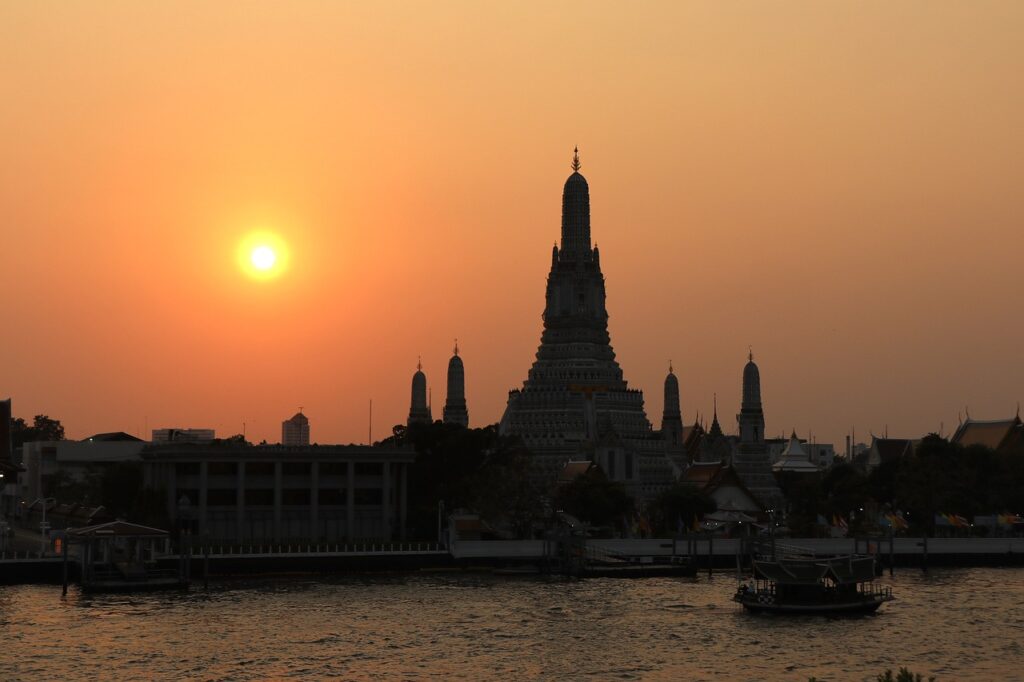
- Bangkok and the centre: temples, palaces, markets and food. Most international flights arrive here, so it works as the first or last base.
- Chiang Mai and the north: mountains, national parks and a cooler climate in the cool season. It is the usual choice for culture and nature in one place.
- Andaman coast (Phuket, Krabi, Phang Nga): the islands and bays of the west. Go when the monsoon has ended, which TAT places in November.
- Gulf coast (Ko Samui and nearby islands, Trat islands in the east): the Gulf side where TAT says the monsoon is ending in October, which can make it an option when the west coast is still wet.
If you are unsure, combine one city base with one beach base. A cultural week in Bangkok and the north followed by a few days on one coast is a manageable first itinerary. For how to behave once you are there, see our guide to responsible travel in Thailand.
How do you get around Thailand?
For long distances, domestic flights save the most time; for medium distances, overnight trains and long distance buses save a hotel night; within cities, taxis, ride hailing apps, tuk tuks and motorbike taxis cover the rest. Which one is best depends on distance and on how much time you have.
- Between regions: fly if the journey would otherwise take most of a day, for example from Bangkok to the far south or the far north. Book early for school holiday and festival periods.
- By train or bus: sleeper trains and coaches connect Bangkok with the north and the south. Reserve ahead in busy months, and read the operator’s own timetable rather than a third party listing.
- To the islands: you need a ferry or speedboat from a mainland pier, sometimes combined with a transfer from the airport. Boat services depend on weather, so leave a buffer day before an international flight.
- In cities: agree the price or use the meter before you start, and use ride hailing apps where they operate to avoid haggling.
What etiquette should you know before you go?
The simplest rules cover dress at religious and royal sites and respect in how you behave. TAT’s guidance for royal palaces asks men to wear a shirt with sleeves and long pants, and women a shirt with sleeves and either a skirt that covers the knees or long pants. It lists sleeveless shirts, cropped tank tops, sheer clothing, shorts, close fitting or ripped jeans and flip flops as items to avoid. Some palaces lend cover ups if you arrive underdressed, but do not count on it.
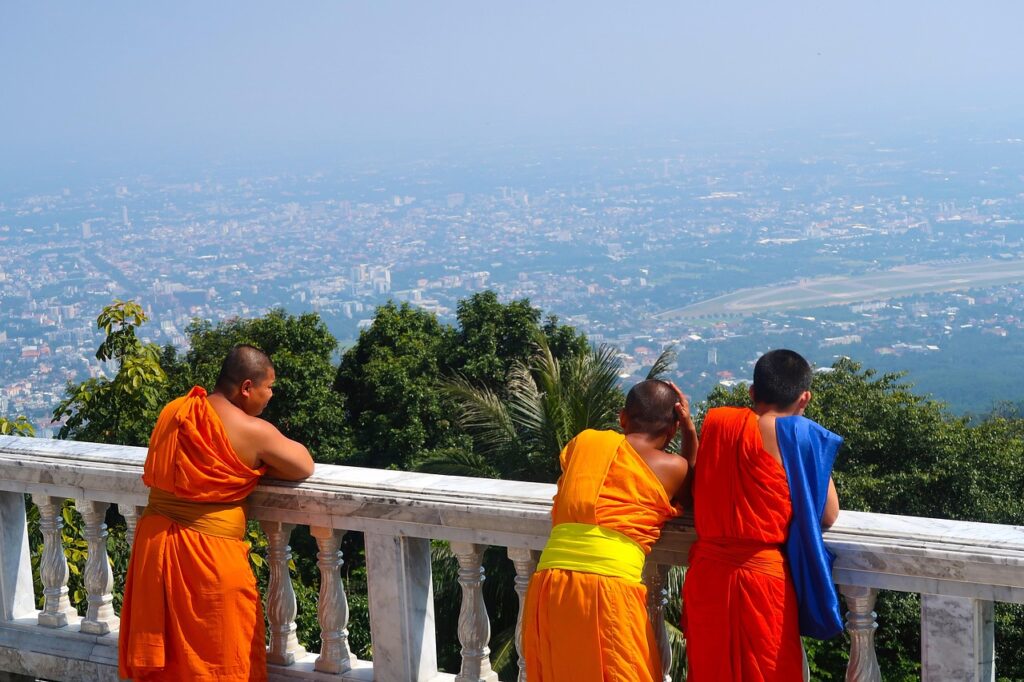
Temples follow the same logic. Cover your shoulders and knees, take your shoes off before entering a hall or a home, and keep your voice low. Do not point your feet at Buddha images or sit with them directed at a monk, and women should not touch monks or hand things to them directly. Treat images of the monarchy with respect.
How much should you budget for Thailand?
Thailand can suit tight and generous budgets alike, and the biggest cost drivers are your accommodation level, the number of flights and the islands you choose. Food from street stalls and local restaurants is typically the cheapest part of the day, while island transfers, tours and beachfront rooms cost more than the mainland equivalent.
To keep the budget realistic, price the big items first: international flights, domestic flights and the islands’ ferries. Peak months, including the cool season in the north and around Christmas and New Year, cost more and fill earlier, so book rooms and transport sooner.
FAQ
Do you need a visa for Thailand?
It depends on your nationality. TAT lists 93 countries and territories with visa free entry for up to 60 days for tourism, and says the stay can be extended once at an Immigration Office. Confirm your own status with the Thai embassy or consulate before you book.
What is the Thailand Digital Arrival Card?
The TDAC is an online arrival form for all non-Thai nationals. You submit it within 3 days before arrival, including the day you arrive. Children and infants need their own. The official site states that no fee is required.
Is April a good month for Thailand?
April is the hottest month, with temperatures that might reach 42 degrees Celsius in the north and northeast according to TAT. It suits the coast, where sea breezes help, and Ko Phi Phi is in its driest period from February to April. Songkran, the water festival, falls in April, so expect crowds and water fights in cities.
Which coast has better weather in November?
TAT states that there is no more monsoon on the Andaman coast in November, and describes the month as the cool season. It describes the monsoon as ending on the Gulf side in October. For either coast, check the forecast close to departure.
What should you wear to visit temples and palaces?
Cover your shoulders and knees. For palaces TAT asks for sleeved shirts and long pants or knee covering skirts, and lists shorts, sleeveless tops and flip flops as items to avoid. Carry a light scarf or shirt in your day bag.
Once your season, region and entry steps are settled, you can book flights, rooms and transfers together; our team arranges trips worldwide, and you can start on the booking page.
Image credits: Pexels; Pixabay / farisbensaad1; Pixabay / yves_cabral
 Seychelles with Kids: Beaches, Reserves and Turtles
 A Week on a Yacht: Daily Life, Space, Seasickness and Cost
 Yacht Charter in Malta: What to Know Before You Book
 How to Behave at a Maltese Festa: A Visitor’s Guide