7 min read · Published: September 4, 2023 · Updated: October 29, 2026 · Prices and details checked: October 2026
Como is the easiest way into the lake: a compact old town at the southern tip, a funicular up to a hill village, and boats that connect the towns along the shore. The train from Milan takes about 40 minutes, so Como works as a day trip or as a base for several days. This guide covers the town and the lake together, in the order most visitors use them.

Key takeaways
- Trains from Milano Centrale to Como San Giovanni take about 40 minutes and run roughly every hour, with fares from 5.40 EUR in second class.
- The old town is small enough to walk in half a day: cathedral, Broletto, lakefront and the Volta museum are all within a few minutes of each other.
- The funicular to Brunate gives the best view of the lake’s southern arm and is worth doing on a clear morning or at sunset.
- Boats from Como reach Bellagio, Varenna and Tremezzo; a ticket to Urio costs 10.40 EUR and to Nesso 16.70 EUR.
- Villa Carlotta in Tremezzo costs 17.50 EUR for adults and is the lake villa best suited to a half day.
Table of contents
How do you get to Como from Milan?
Take the Trenord train from Milano Centrale to Como San Giovanni. The journey covers 47 km in about 40 minutes, trains leave roughly every hour, and a second class fare starts at 5.40 EUR.
From Como San Giovanni station it is a flat walk of around ten to fifteen minutes to the cathedral and the lakefront. A second station, Como Lago, serves the regional line from Milano Cadorna and sits closer to the water, so check which station your ticket and timetable use.
If you are still planning your time in the city itself, our Milan guide covers what to see before or after the lake.
What should you see in Como’s old town?
Start at the cathedral and work outward. The old town is a small grid of pedestrian streets around the Duomo, and the main sights sit within a short walk of each other.
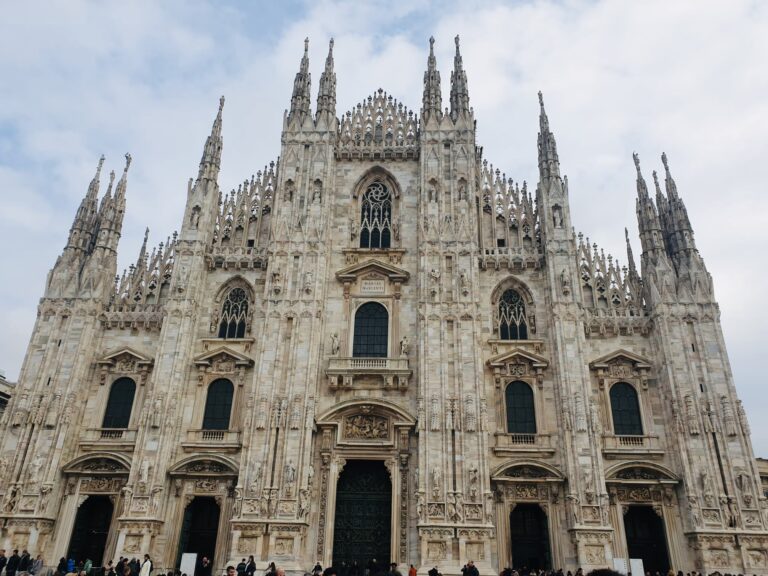
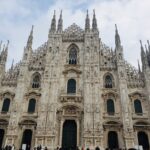
The Duomo di Como was begun in the late 14th century and finished in the 18th, which is why Gothic and Renaissance elements stand side by side and the dome is Baroque. Next to it stands the Broletto, the medieval town hall with its striped stonework. Both face the main square, where cafes make a good first stop.
The Tempio Voltiano near the lakefront is a small museum dedicated to Alessandro Volta, the physicist who was born in Como and gave his name to the volt. It holds his instruments and works well as a short, indoor stop of an hour or less. The Basilica di Sant’Abbondio, a Romanesque church a little outside the centre, rewards a detour if you like early medieval architecture.

Find a hotel for your Italy trip
Flight plus hotel for all Italian regions, searchable by date and budget.
Show Italy offersIs the funicular to Brunate worth it?
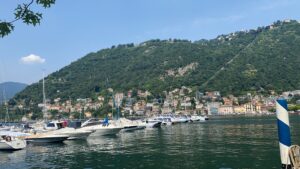
Yes, if the sky is clear. The funicular climbs from Como to the hill village of Brunate in a few minutes and opens a view over the town, the water and the surrounding mountains.
The funicular has run since 1894 and leaves from a station near the lakefront. A return ticket is inexpensive, in the range of a few euros, but check the current fare at the lower station because the operator updates tariffs. At the top, Brunate has a small main street, cafes, and footpaths along the ridge. The Faro Voltiano lighthouse, a memorial to Volta, is a short walk uphill and gives a wider view.
Go in the morning for the clearest light, or in the last hours before sunset. Midday haze is common in summer and flattens the view.
How do the boats on Lake Como work?
Navigazione Laghi runs the public boats, and from Como you can reach the lake’s main towns on slower ships as well as on faster services. Slow ships stop at many piers, so a trip to Bellagio takes much longer than a direct run.
Tickets are priced by distance. For a sense of scale, the operator lists Como to Urio at 10.40 EUR for adults (5.80 EUR for children aged 4 to 11) and Como to Nesso at 16.70 EUR (9.30 EUR for children). Fares to Bellagio, Varenna and Tremezzo sit further up the same scale, so look up your exact route on the operator’s website before you go. Timetables change by season and day of the week, and frequency is higher in summer, so plan around the current schedule rather than a fixed rhythm.
A day ticket makes sense if you want to hop between three or more piers. A single return to one town is cheaper on its own. Check the time of the last boat back before you set out.
Which lake towns are worth a stop?
Choose by what you want from the day: gardens and a grand villa at Tremezzo, shops and views at Bellagio, a quieter and more intimate waterfront at Varenna.
Bellagio sits at the tip of the peninsula where the lake splits into two arms. It has steep stepped lanes, lakefront cafes and a good vantage point at the end of the promontory. It is also the busiest of the three, so arrive early or late in the day.
Varenna is smaller and faces Bellagio across the water. The colourful houses, the narrow lanes and the short climb to Castello di Vezio make it the quieter option for a half day.
Tremezzo is home to Villa Carlotta. Adult admission is 17.50 EUR, and the villa and gardens open from 10:00 to 18:00 with the last ticket sold at 17:00. Allow two to three hours for the rooms and the terraced garden. Opening hours can change with the season, so confirm on the villa’s website. The nearby Villa del Balbianello can be visited on the western shore, but the price is only listed in the operator’s online ticket shop, so check it there.
Two stops with unhurried time at each beat all three in a rush.
Why is Como known for silk?
Como has woven silk for centuries and is still one of the main centres of European silk production, mostly for fashion houses that design elsewhere. The industry shaped the town long before tourism did.
The Museo Didattico della Seta explains the process from silkworm to printed fabric, with looms and historic samples, and is a useful stop if you want to understand what the shops sell. Scarves and ties are the usual souvenirs. Prices vary widely by whether the piece is printed by hand or by machine, so ask where it was made and look at the label before you buy. Shops in the old town and the streets around the cathedral stock both mass-market and workshop-made pieces.
Where should you walk and relax by the water?
Follow the lakefront promenade from the centre to Villa Olmo, a neoclassical villa with a public park that is free to walk. The path is flat, shaded in places, and takes about twenty to thirty minutes one way at an easy pace.
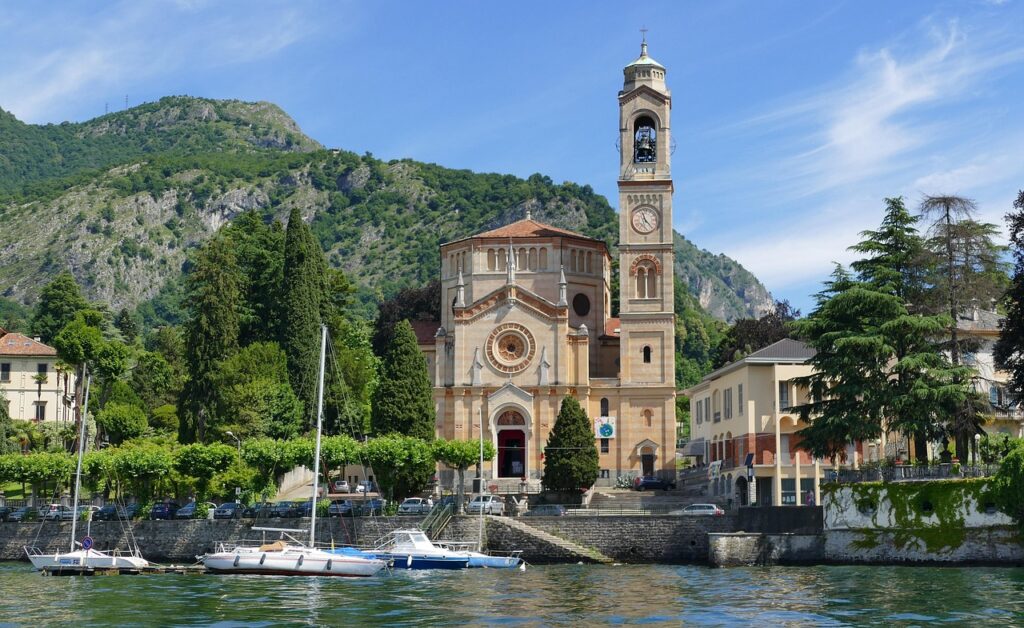
The villa itself hosts exhibitions and events through the year, so check the programme if you want to go inside. The park is a good spot for a picnic with supplies from the market or a bakery. On the way you pass Piazza Cavour, the main waterfront square by the boat piers, and the rationalist war memorial designed by Giuseppe Terragni, which draws architecture fans.
FAQ
Is Como worth visiting as a day trip from Milan?
Yes. The train takes about 40 minutes and runs roughly hourly, so you can reach Como in the morning, see the old town, ride the funicular and still have time for a boat to one lake town. Add a second town only if you start early.
How many days do you need for Como and the lake?
One full day covers the old town, the funicular and one boat trip. Two or three days let you add Bellagio or Varenna and Villa Carlotta without rushing. A longer stay suits you if you want to hike along the lake or the hills.
What is the best way to get around Lake Como?
The public boats are the most flexible way to move between towns on the lake, and they avoid the narrow, congested lakeside road. Use buses for places without a pier. Driving works for a base in a smaller village but parking is tight in summer.
Which is better, Bellagio or Varenna?
Bellagio has more shops, restaurants and sights, and Varenna is smaller and calmer. If you only have time for one and want atmosphere, choose Varenna. If you want a wider choice of things to do, choose Bellagio.
Combining Como with other places in Italy or beyond is easiest when flights, trains and hotels are planned together, and Travelissimo arranges this through its booking service.
Image credits: Travelissimo; Pixabay / Camera-man; Pixabay / travelspot
Sources (3)
Prices, times and rules in this article come from these sources. Last checked: October 29, 2026.
 Holiday Apartment or Hotel? How to Choose and Book Well
 Best Beaches in Europe 2027: Eight Beaches and How We Chose Them
 Most Popular Cities in Europe 2027 and When to Go
 Summer Holidays 2027: When to Book and Where to Go